
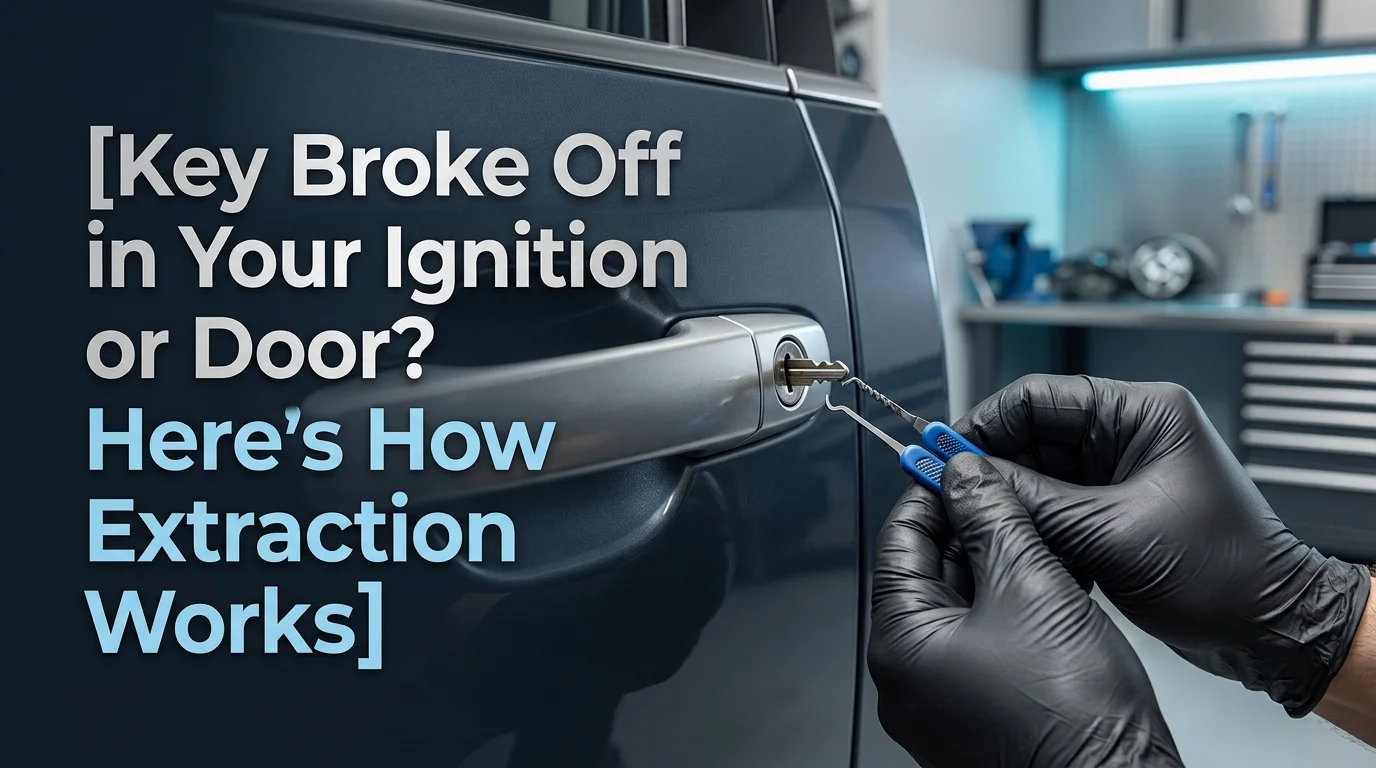
You turn the key, feel a small snap, and now half of it is sitting in your hand while the rest stays buried in the ignition or door lock. That sinking feeling is completely normal. But here’s the good news: a snapped key almost never means the disaster it feels like in the moment. Broken key extraction is something a trained locksmith handles all the time, and in most cases the fragment comes out, and a new key gets cut in the same visit.
This guide covers what to do in that first minute, why keys snap in the first place, and whether it’s actually worth trying a DIY fix. Then we’ll get into how professional extraction works, what it usually costs, and when it makes sense to just call Key Decipher, LLC near Lauderdale Lakes.
Before You Touch Another Thing, Do This First
The moment your key snaps, stop turning it right away. Continuing to twist or jiggle it only drives the broken piece deeper past the pins and can knock the lock cylinder out of alignment. Avoid forcing the stub back in, since that usually pushes it beyond where pliers or fingers can reach. Skip random household oils too, as they attract dust and grime that can make a key stuck in the ignition worse over time.
Instead, take a moment to look at how much of the key is showing in the keyway, since that determines which removal method actually has a chance of working. From there, you’re really choosing between two paths: a careful DIY attempt or calling in an emergency key extraction service.
Why Keys Snap in the First Place
Most snapped keys come down to one of two things. Either the key itself gave out, or the lock it was fighting against did. Knowing which one it was helps you avoid a repeat, and it gives your locksmith a head start before they even show up.
Metal Fatigue and Wear
Every time a key bends or twists even slightly, it picks up a little more stress in the metal. String enough of those small moments together over months and years, and you get metal fatigue right at the key’s shoulder, which happens to be the thinnest, weakest part of the blade. That’s the key snap point, and it’s where most breaks actually happen.
Lock-Side Causes
Sometimes the key itself isn’t even the problem. Rust or built-up grime inside the cylinder creates friction on every turn. A keyway that’s slightly misaligned, or pins that haven’t seen lubricant in years, can bind hard enough to snap a key during totally normal use. Ignition cylinders tend to wear out faster than door locks too, since constant vibration and engine heat speed up cylinder pin damage over time.
Should You Try Removing a Broken Key Yourself?
Not every broken key needs a locksmith on speed dial right away. Some situations genuinely favor giving DIY a shot. Others can turn a small problem into a much bigger repair bill fast.
When It’s Worth a Try
If part of the key is sticking out of the keyway and the lock still turns once the fragment shifts, you’re in decent shape here. Needle-nose pliers, tweezers, or even a bent paperclip can sometimes grab enough of that jagged key edge to pull it free. Go slow. Stop the second you feel resistance building instead of easing.
A dry, graphite-based lubricant works better here than an oil-based spray. Oil leaves behind a film that attracts grit inside precision automotive or deadbolt cylinders, which just adds friction down the line. Sometimes this lubrication technique alone is enough to let a stubborn fragment slide right out, no tools needed.
When It Usually Backfires
When nothing pokes out from the keyway, pliers and tweezers can’t grab hold, so repeated tries just scratch the pins. Glue stick or superglue tricks aren’t safer either; they can bond the fragment right into the cylinder and turn a quick fix into a full lock replacement. And ignition cylinders, tucked behind trim panels and the steering column, are easy for an amateur to damage.
If the fragment’s flush, it’s an ignition, or your first try already failed, that’s the point to call a pro. A trained technician brings the right extractor, not a guess from a kitchen drawer.
How Professional Broken Key Extraction Actually Works
Once you watch a locksmith work through this, it usually clears up why the job is worth paying for. It’s methodical, not mysterious, and every step is there to protect the lock from further damage.
The Tools of the Trade
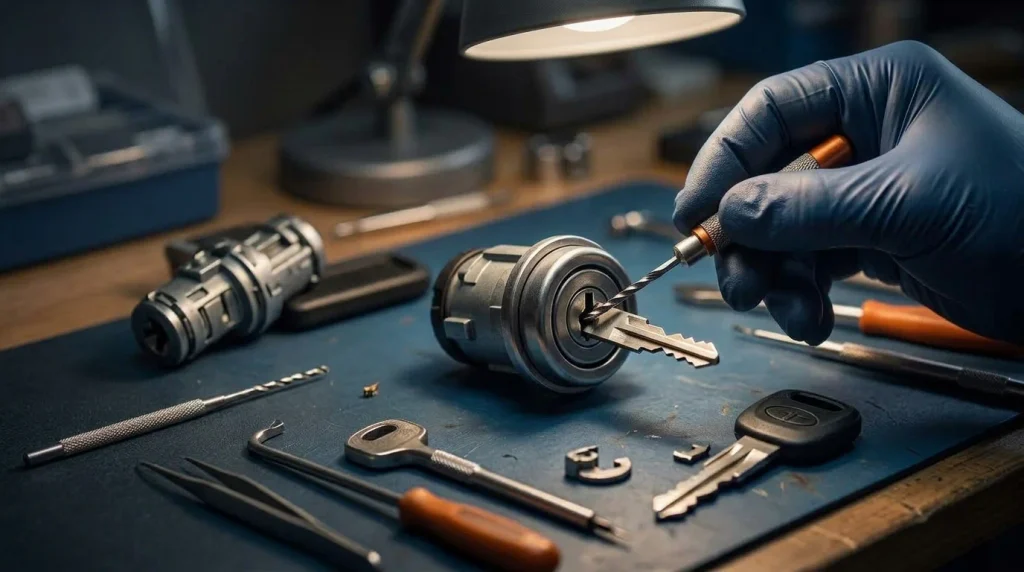
Professionals reach for purpose-built extraction tools instead of household substitutes. Hook extractors are thin, barbed tools that slide alongside the fragment and catch the key’s cuts to draw it straight out. Spiral extractors work more like tiny corkscrews, twisted directly into the broken metal, and they’re a good option when a fragment sits deep inside the cylinder. Saw blade extractors are flat and serrated, which helps grip a clean break along its edge when the key snaps in one straight line. A tension wrench and a set of lock pick tools often come into play too, holding pin positions steady during precision extraction, especially on older or worn cylinders.
The Step-by-Step Process
First, the technician lubricates the keyway with a dry, non-residue lubricant to cut down on friction before any tool goes near it. Next comes the assessment: how much protrudes, what angle the snap happened at, and whether the cylinder still rotates at all. From there, they pick the matching extractor and slide it in alongside the fragment (never through it, since that would just push it deeper). The tool catches the key’s bitting and draws the broken key fragment out slowly, using steady pressure rather than force. Once the remnant removal is done, they test the lock or ignition and, in most cases, can cut a replacement key right there on the spot.
Drilling out a cylinder or replacing it outright is a much bigger job. Correct extraction leaves the pins and lock body untouched, so there’s no lock reassembly needed. That keeps the whole thing faster and a lot cheaper for you.
Ignition vs. Door Lock: Why the Approach Changes
A key snapped in the ignition and one broken off in a car door or house lock call for different approaches because the locks themselves are built completely differently. Ignition cylinders sit recessed behind the steering column and connect directly into the vehicle’s anti-theft system and electrical wiring, so getting a stuck key out safely takes automotive-specific tools and a careful, steady hand.
One wrong move in there can trip a warning light on the dashboard or damage the ignition switch itself, which turns a simple extraction into a much bigger repair. Door locks don’t carry that same risk. The mechanism is far more exposed and easier to access, which is usually why a broken key in a door lock gets resolved faster. That said, an older deadbolt with worn pins can still turn what looks like a simple job into something trickier.
There’s also a practical difference in how stranded you end up. A snapped ignition key usually leaves you stuck somewhere inconvenient, maybe a parking lot or the side of the road, while a broken house key at least leaves you a few steps from a spare entrance or a neighbor who can help. That’s exactly why mobile, on-location extraction matters most for vehicles. It’s a big reason Key Decipher, LLC, builds its response times around getting to drivers quickly, wherever they happen to be stuck.
How Much Does Broken Key Extraction Cost?
Key extraction costs are between $50 and $200, with most standard jobs averaging around $95. The cost isn’t a flat number you can just quote off the top of your head. It depends on the type of lock, how deep the fragment sits, what time of day it is, and whether you also need a replacement key cut.
Here’s a rough sense of where things tend to land. Standard door lock extraction is usually the most affordable tier, since the cylinder is easy to reach and rarely needs to come apart. Automotive ignition extraction runs higher, given the specialized tools and the added complexity of vehicle electronics. After-hours or emergency calls—think weekends, holidays, late nights—usually carry a modest premium over standard daytime rates. Now compare that to the alternative. A full lock or ignition cylinder replacement almost always costs more than extraction alone, and it takes longer too. Give us a call for a quote.
When It’s Time to Call an Emergency Key Extraction Service
A few signs point straight to a professional call, no DIY needed.
The fragment sits flush or below the surface of the keyway, with nothing to grab onto. A first DIY attempt already failed, or the lock has stopped turning completely. The break happened in a vehicle ignition instead of a household door. The lock secures a business entrance, a safe, or a rental property where every hour of downtime costs money. Glue or some other quick-fix method has already been tried and might complicate the removal further.
A same-day emergency call is pretty simple in practice. A mobile technician shows up with a full extraction kit, checks out the lock cylinder on-site, and in most cases resolves the break and cuts a new key in that same visit. No waiting days for parts, no separate follow-up appointment needed.
Preventing the Next Broken Key
A little upkeep goes a long way toward avoiding a repeat breakdown down the road.
- Replace worn keys before they fail. A key that feels loose, thin, or visibly bent is a snap waiting to happen.
- Lubricate your locks once a year. A dry graphite or Teflon-based lubricant keeps the pins moving freely and cuts down on the force it takes to turn a key.
- Skip the duplicate-of-a-duplicate route. Each copy can drift slightly out of spec, so cutting fresh keys from the original blank keeps everything tighter.
- Deal with a sticking lock right away. A key that already needs wiggling or extra force is telling you a wear stress point is forming.
Frequently Asked Questions
Can a locksmith remove a broken key without damaging the lock?
Yes, in most cases. Proper broken key extraction preserves the existing cylinder and pins, so you avoid the cost of a full lock replacement almost every time.
How long does key extraction take?
Most door lock jobs wrap up in well under 30 minutes. Ignition extractions can run a bit longer because of the extra access work around the steering column.
Will I need a whole new lock after extraction?
Rarely. Extraction alone usually does the trick, and a technician can typically cut a fresh replacement key on-site once the fragment is out.
Is it safe to use WD-40 on a broken key stuck in the ignition?
A quick spray in a pinch won’t wreck most locks, but a dry, graphite-based lubricant is the smarter long-term choice for ignitions and precision cylinders.
Get Fast, Local Key Extraction With Key Decipher, LLC
A snapped key doesn’t have to wreck your whole day. Key Decipher, LLC works with homeowners, drivers, and businesses across Lauderdale Lakes and the rest of Broward County, handling mobile broken key extraction that gets you back on the road or through your front door quickly. Our technicians carry the full lineup of extraction tools for ignitions, deadbolts, and everything in between, so most jobs get wrapped up in a single visit.
Give Key Decipher, LLC a call today for same-day or emergency service, and let a local team take care of the extraction while you get on with your day.