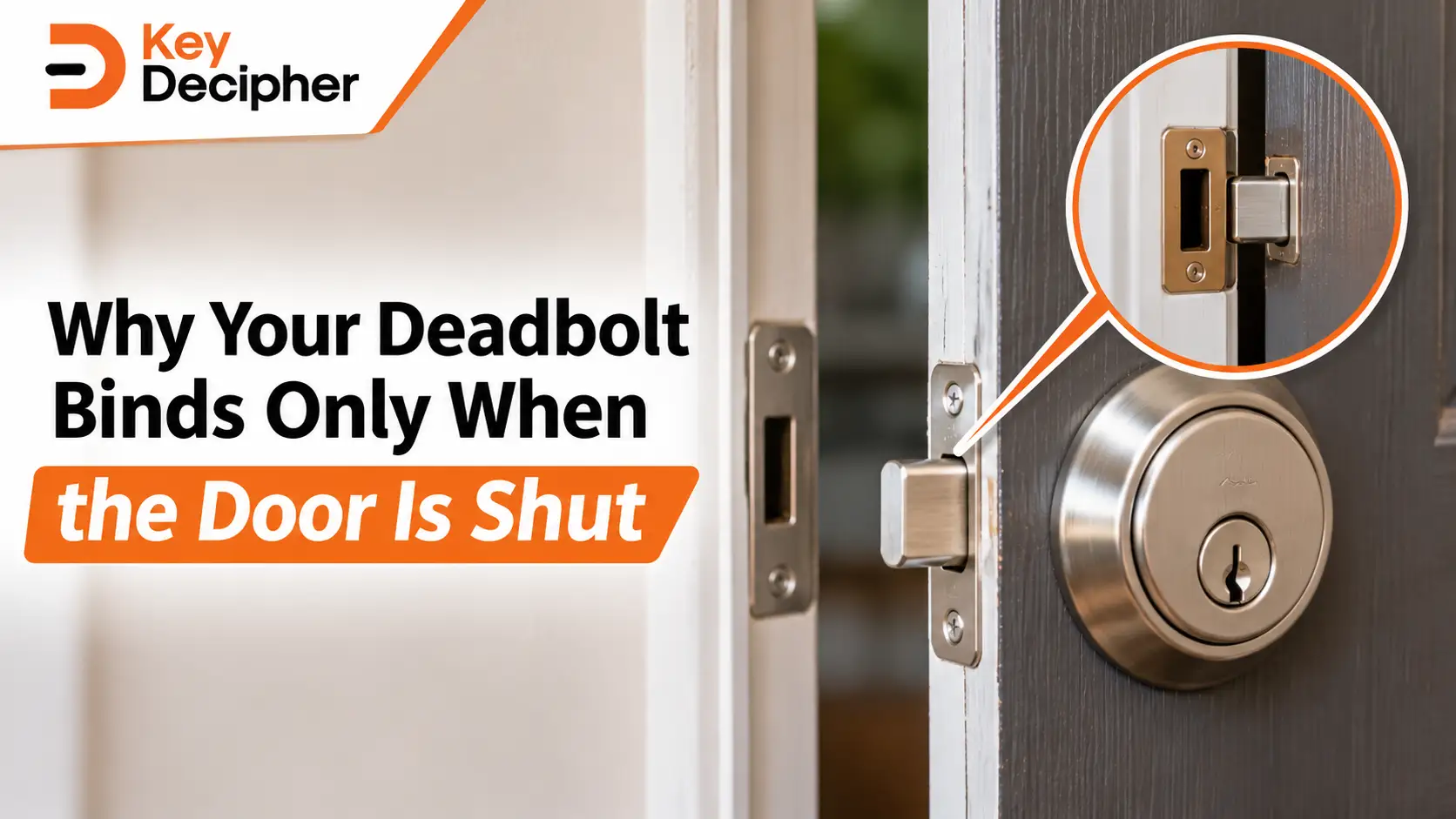
If your deadbolt turns smoothly while the door is open but becomes difficult to operate once the door is closed, the lock itself may not be the problem. This behavior often points to an alignment issue between the deadbolt and the strike plate in the door frame.
A small change in door position can prevent the bolt from entering its opening correctly. Understanding what causes that resistance can help you identify whether the problem involves the hinges, door frame, strike plate, or locking mechanism.
Why Does a Deadbolt Work With the Door Open but Not Closed?
With the door open, the deadbolt extends without needing to pass through the strike plate. The lock bolt should fit properly into the strike opening when the door is shut. If the two are slightly out of position, the bolt may hit the edge of the strike plate instead of entering smoothly.
This difference is an important diagnostic clue. It suggests that the lock can operate on its own, but something changes when the door meets the frame.
5 Common Reasons Your Deadbolt Jams When the Door Closes
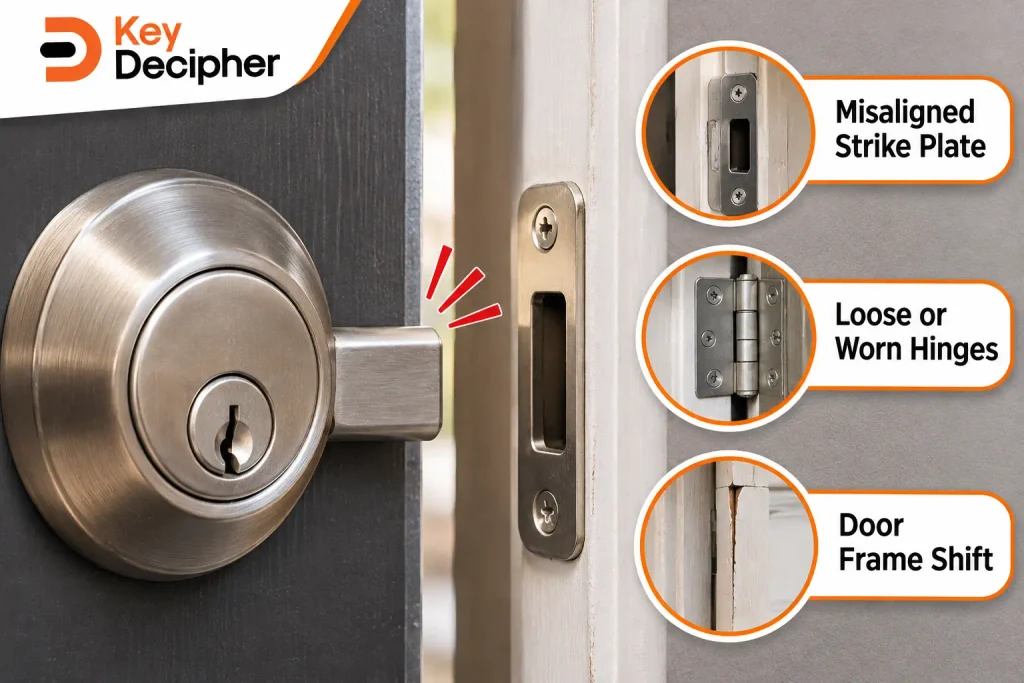
1. The Strike Plate Is Misaligned
The strike plate is the metal piece attached to the door frame that receives the deadbolt. If its opening sits too high, too low, or too far inward, the bolt may strike the metal edge.
Even a small alignment difference can create noticeable resistance. Look for fresh scratches or worn marks around the strike plate opening. These can indicate where the bolt is making contact.
2. Door Hinges Have Started Sagging
Loose hinge screws, worn hinges, or gradual door movement can cause the door to drop slightly. This can prevent the deadbolt from fitting correctly into the strike plate.
You might also notice uneven gaps around the door, rubbing near the top or bottom, or a latch that no longer meets its opening properly. These symptoms suggest the door may need alignment before any lock components are replaced.
3. The Door Frame Has Shifted
Door frames can move over time because of building movement, installation problems, or changes in surrounding materials. A frame that is no longer square can affect how the door closes and where the deadbolt lands.
If the door appears uneven or requires pressure to latch, the issue may extend beyond the lock hardware. Adjusting the strike plate without checking the frame could provide only a temporary improvement.
4. Weatherstripping Creates Too Much Resistance
Weatherstripping helps seal gaps around an exterior door, but excessive compression or incorrectly installed material can prevent the door from closing naturally.
You may need to push or pull the door firmly before turning the deadbolt. That added pressure can shift the bolt’s position relative to the strike plate and make locking difficult.
5. The Lock Has Internal Damage or Was Not Installed Correctly
Although alignment is a common cause, the deadbolt itself should not be ruled out. An incorrectly installed lock, damaged bolt, or worn internal component may create resistance during operation.
If the key still sticks with the door open, the problem may lie within the cylinder or lock assembly. If it works freely when open but binds only when closed, inspect the door-to-frame alignment first.
How to Find the Source of a Lock Alignment Issue
A few careful observations can help narrow down the cause without forcing the lock.
| What You Notice | Possible Problem |
| Bolt hits the top or bottom of the opening | Strike plate or hinge alignment |
| Door needs pushing to lock | Weatherstripping or frame pressure |
| Uneven gaps around the door | Hinge sagging or frame movement |
| Key feels stiff with the door open | Lock cylinder or internal mechanism |
| Fresh marks on the strike plate | Bolt rubbing against the opening |
Try operating the deadbolt with the door open, then compare what happens when the door is gently closed. Do not repeatedly force the key or thumb turn if resistance increases.
Does Lauderdale Lakes Weather Affect Door Alignment?
South Florida’s warm, humid conditions can contribute to changes in some door materials, particularly wood. Moisture-related expansion may make a door fit more tightly in its frame, while repeated seasonal changes can make an existing alignment problem more noticeable.
The nearby Fort Lauderdale climate station records a 1991–2020 annual precipitation normal of 68.77 inches, with rainfall normals reaching 9.97 inches in September. These figures describe regional climate patterns, not the conditions at every Lauderdale Lakes property, but they help explain why moisture exposure deserves consideration when diagnosing exterior door problems.
Should You Adjust the Strike Plate or Replace the Deadbolt?
Replacing a deadbolt is not always necessary. If the lock works smoothly with the door open, the first step is usually to determine whether the bolt is contacting the strike plate incorrectly.
A locksmith can inspect hinge condition, door clearance, strike plate positioning, and the locking mechanism before recommending an adjustment or replacement. If the existing hardware is damaged or no longer operates reliably, professional deadbolt installation may be necessary. However, if the frame has shifted or the door is misaligned, correcting that underlying issue should come first.
When Should You Call a Residential Locksmith?
Consider professional help if the deadbolt repeatedly jams, the key becomes difficult to turn, or the door requires excessive pressure to lock. Avoid forcing the mechanism because repeated strain can damage the key, cylinder, or internal lock components. If a key breaks inside the lock, understanding how broken key extraction works can help you avoid causing additional damage while waiting for professional assistance.
For homeowners in Lauderdale Lakes, Key Decipher, LLC. can inspect the locking mechanism and surrounding door hardware to determine whether the problem comes from alignment, installation, or a failing component.
Frequently Asked Questions
Why Does My Deadbolt Work Smoothly With the Door Open?
With the door open, the bolt does not need to line up with the strike plate. Smooth operation in this position often suggests that door or frame alignment is contributing to the problem.
Can a misaligned strike plate damage a deadbolt?
Yes. Repeatedly forcing a bolt against the strike plate can put unnecessary stress on the lock mechanism and key. Correcting the alignment can help prevent further wear.
Should I replace my deadbolt if it only jams when the door is closed?
Not necessarily. The lock may be functioning correctly, while the door, hinges, or strike plate are out of alignment. Have the cause identified before replacing the hardware.
Final Thoughts: Fixing the Alignment Before the Lock Fails
A deadbolt that works with the door open but jams when closed often signals a problem with how the door meets its frame. Checking the strike plate, hinges, weatherstripping, and door position can help reveal the cause before the mechanism suffers additional damage.
If the problem persists, Key Decipher, LLC. can help determine whether your door needs a hardware adjustment, alignment correction, or deadbolt repair.