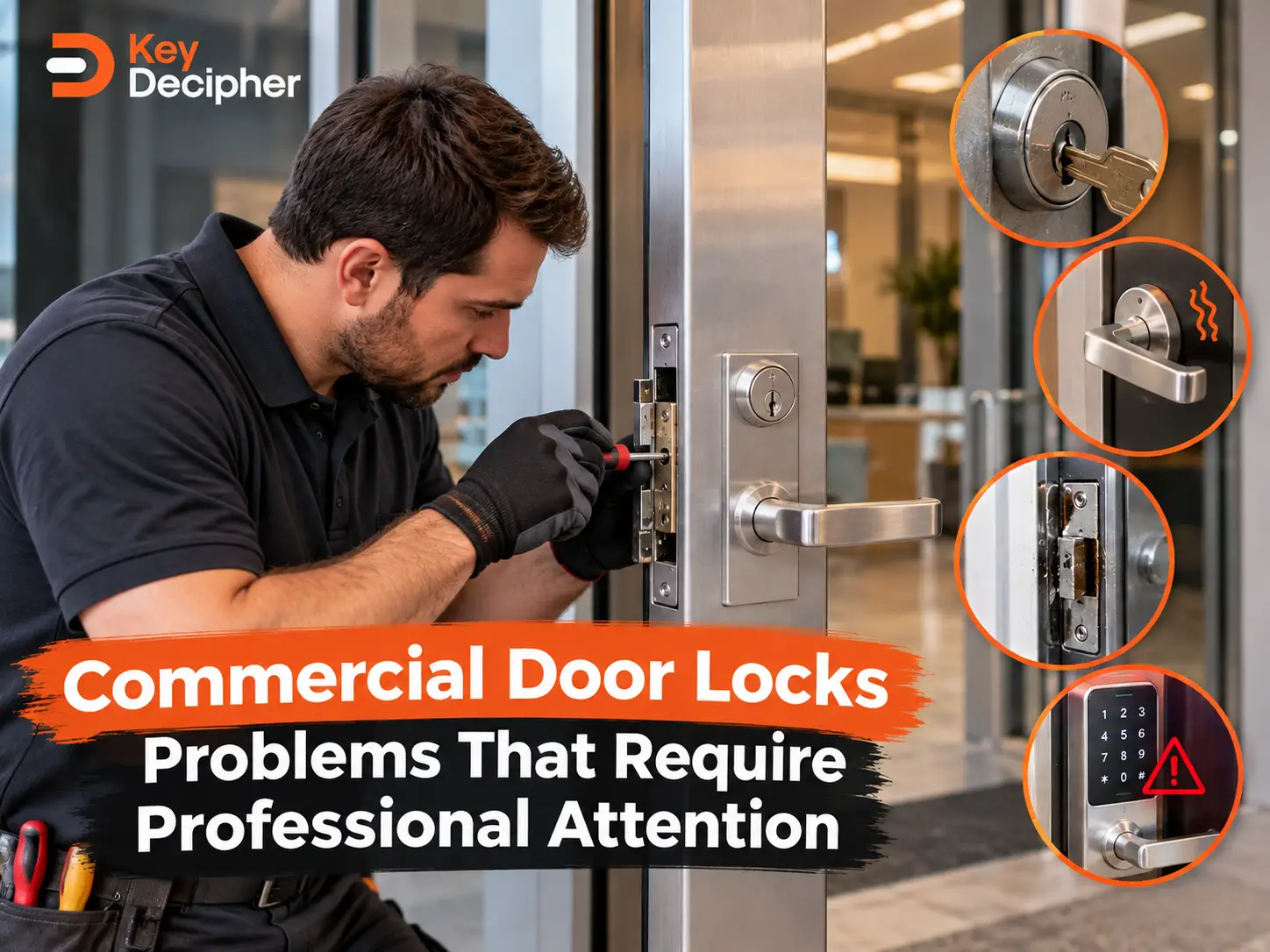
When a commercial door lock sticks, jams, or will not turn, it can interrupt daily operations and create unnecessary security risks. What seems like a minor inconvenience may indicate worn internal parts, a misaligned door, or damaged hardware. Ignoring these warning signs can lead to unexpected lockouts, costly repairs, and problems securing your property.
Strong access security gives businesses confidence that their staff, valuable assets, merchandise, and confidential records remain protected. Recognizing common commercial door lock problems early allows business owners to address them before a faulty mechanism becomes a serious access or security concern.
When a Commercial Lock Starts Sticking or Jamming
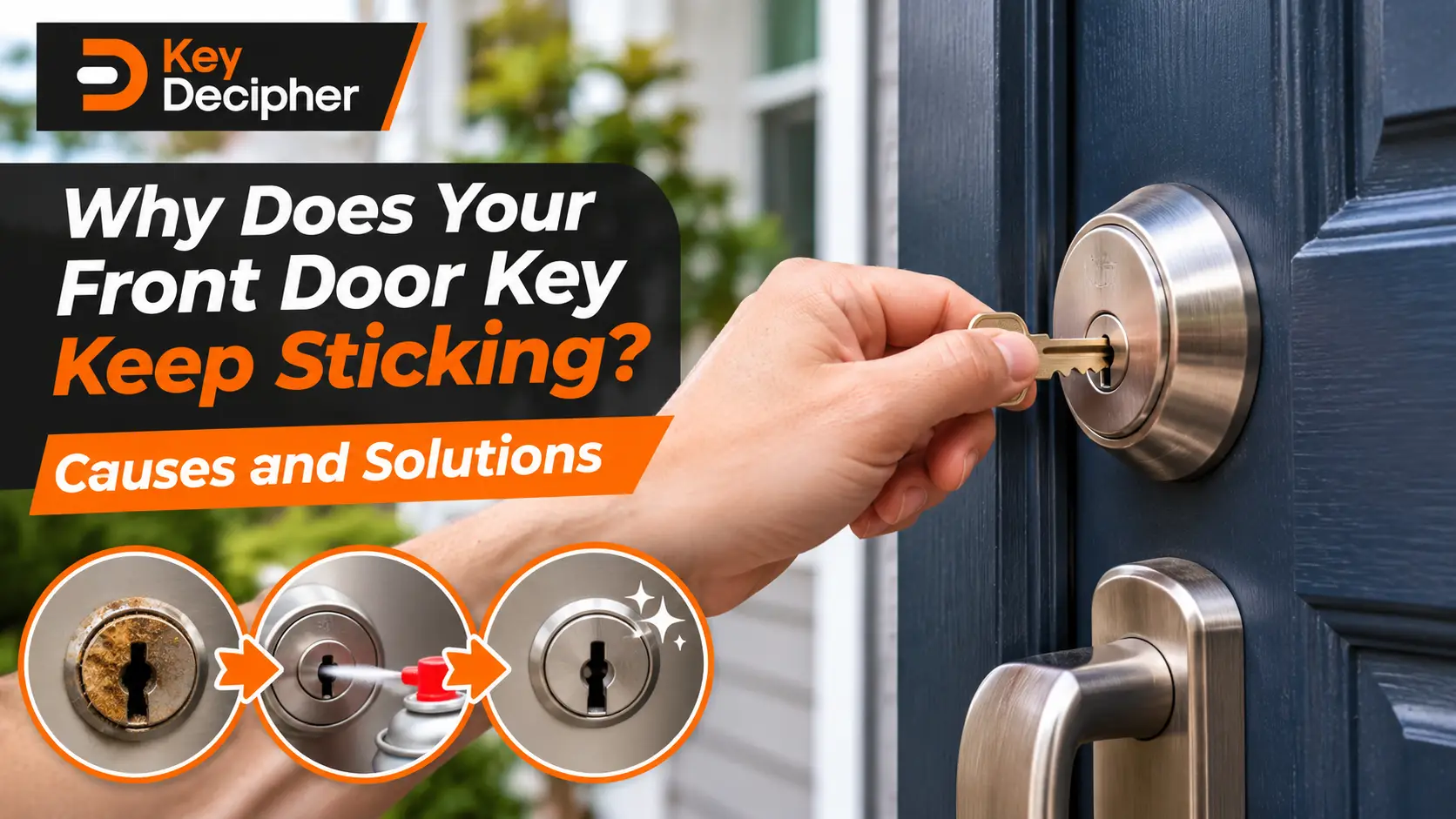
Do not force the key or continue twisting it with unnecessary pressure. The lock cylinder may contain worn components, accumulated debris, or internal damage. Sometimes, the key may be bent or worn, making it difficult to engage correctly with the lock’s internal mechanism.
Turn the key gently to avoid damaging the lock mechanism. This can break the key inside the cylinder and turn a manageable repair into a more complicated service call.
If the lock works only intermittently, a commercial locksmith can examine the key, cylinder, and internal parts to determine why. Persistent sticking should not be dismissed simply because the door still locks occasionally.
When the Door Fails to Latch or Lock Properly
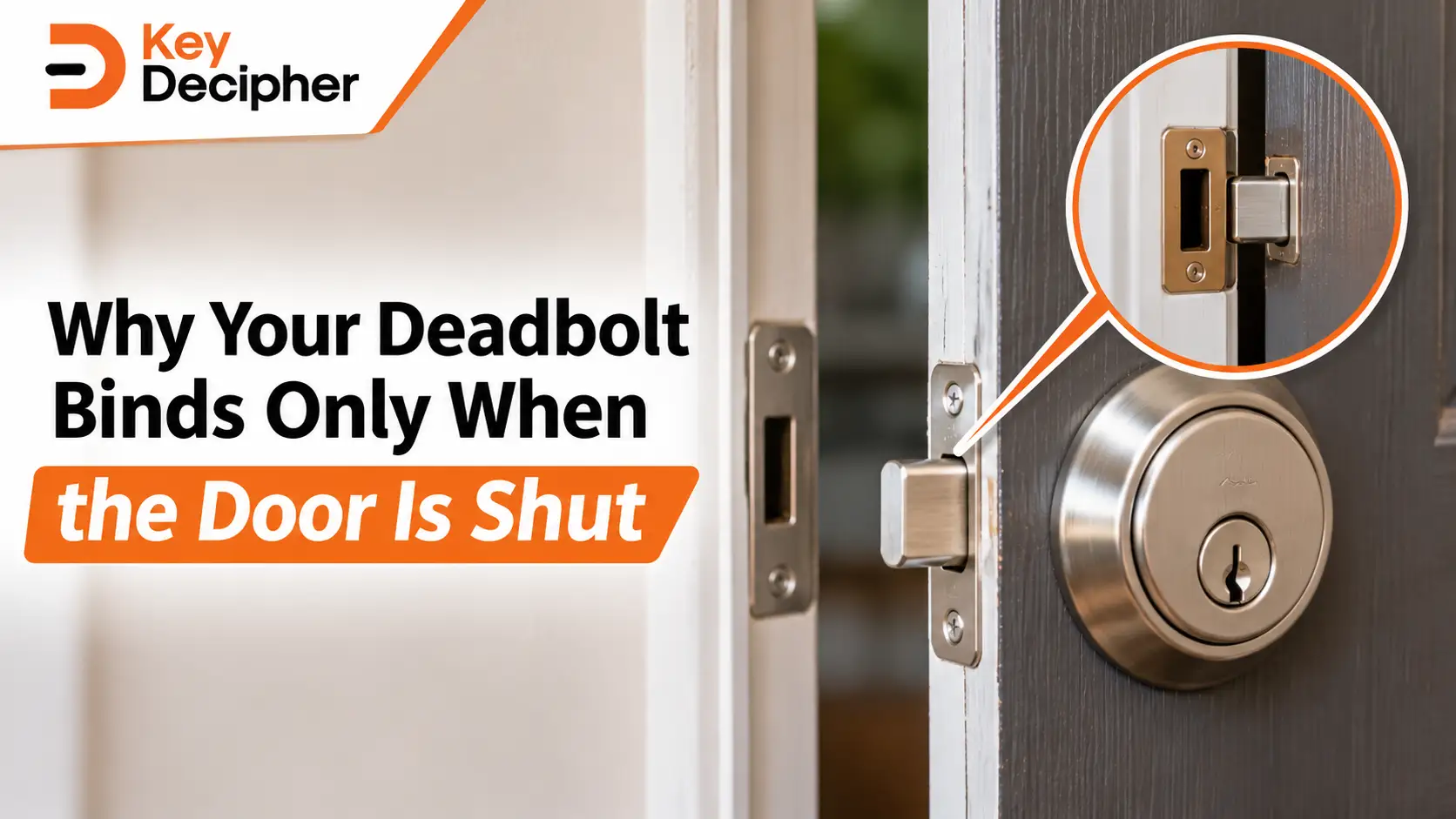
Sometimes the lock is not the real problem. A commercial door may sag, shift, or become misaligned, preventing the latch from meeting the strike plate correctly. Loose hinges, damaged frames, and worn hardware can also interfere with proper closing.
Watch for these signs:
- The door needs to be lifted or pushed firmly before it will lock.
- The latch misses the strike plate.
- The key turns, but the door still does not lock securely.
- The door rubs against its frame or no longer closes evenly.
These symptoms require more than adjusting the lock blindly. A professional can inspect the door alignment, hinges, frame, latch, and strike plate together. Correcting the underlying issue helps prevent recurring failures and unnecessary lock replacements.
Loose Hardware, Damaged Cylinders, and Broken Keys
Commercial door hardware experiences repeated use throughout the working day. Over time, handles can loosen, mounting screws can shift, and lock mechanisms can wear. Exterior hardware may also deteriorate from weather exposure, moisture, and corrosion.
A loose handle does not always mean the entire lock must be replaced. However, movement around the cylinder, a damaged keyway, or a latch that fails to engage consistently deserves attention.
Do not attempt to extract a deeply broken key with improvised tools or dismantle a lock without knowing how its components fit together. After inspecting the damage, a locksmith can recommend the most suitable solution, whether it involves a repair or a replacement.
Electronic Locks and Access Problems
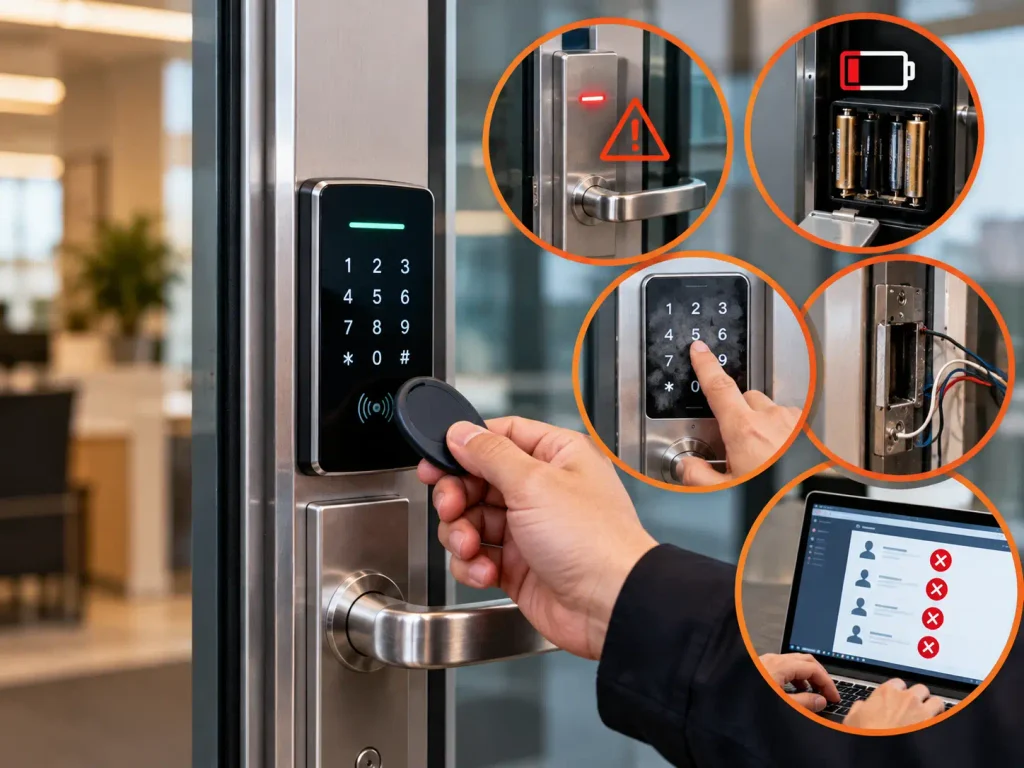
Businesses using electronic locks or access control systems can experience different problems. Authorized users may be unable to enter because of dead batteries, power interruptions, faulty readers, damaged wiring, or incorrect access settings.
Before assuming the lock has failed, check the manufacturer’s recommended troubleshooting steps and any system alerts. If the issue affects multiple doors, the cause may involve a shared power supply, controller, or access system rather than an individual lock.
Repeated failures, unexplained access changes, or a door that does not secure after an attempted entry should be investigated promptly. Maintain an authorized backup entry plan, particularly for employees who require access beyond regular business hours.
When to Fix, Rekey, or Replace a Business Lock
The right response depends on the condition of the hardware and the security risk. Repair may be sufficient when a replaceable component has failed, but the lock remains suitable for the door. Rekeying changes which keys operate a compatible cylinder without necessarily replacing the entire lock.
Replacement may be appropriate when a lock is severely damaged, repeatedly fails, no longer meets the property’s security requirements, or cannot be repaired reliably.
| Situation | Possible next step |
| Sticking key or inconsistent turning | Inspect the key and cylinder |
| Door does not latch correctly | Check alignment, hinges, and strike plate |
| Lost keys or staff access changes | Assess whether rekeying is appropriate |
| Repeated mechanical failure | Compare repair with replacement |
| Electronic access stops working | Diagnose the lock and control system |
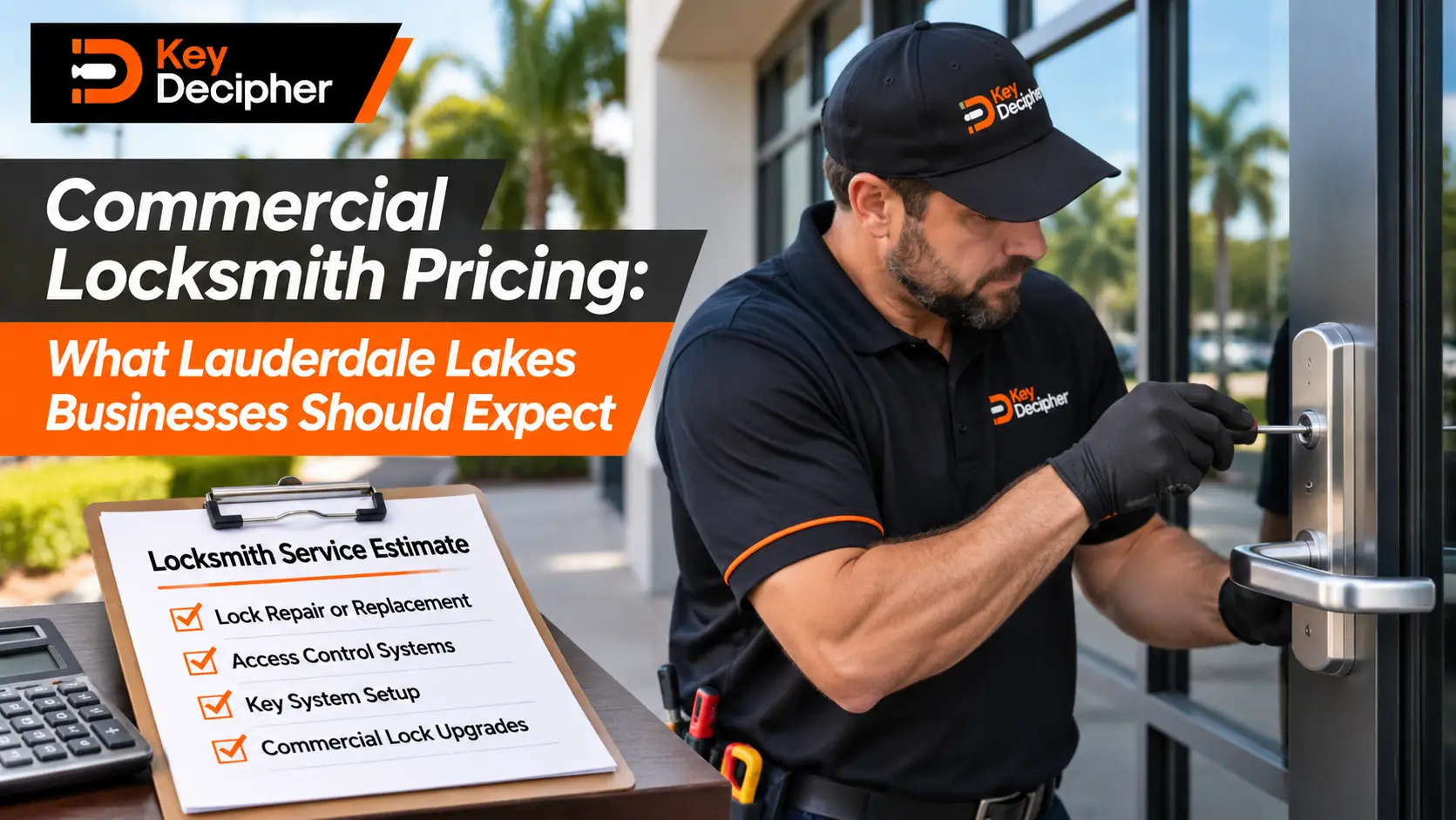
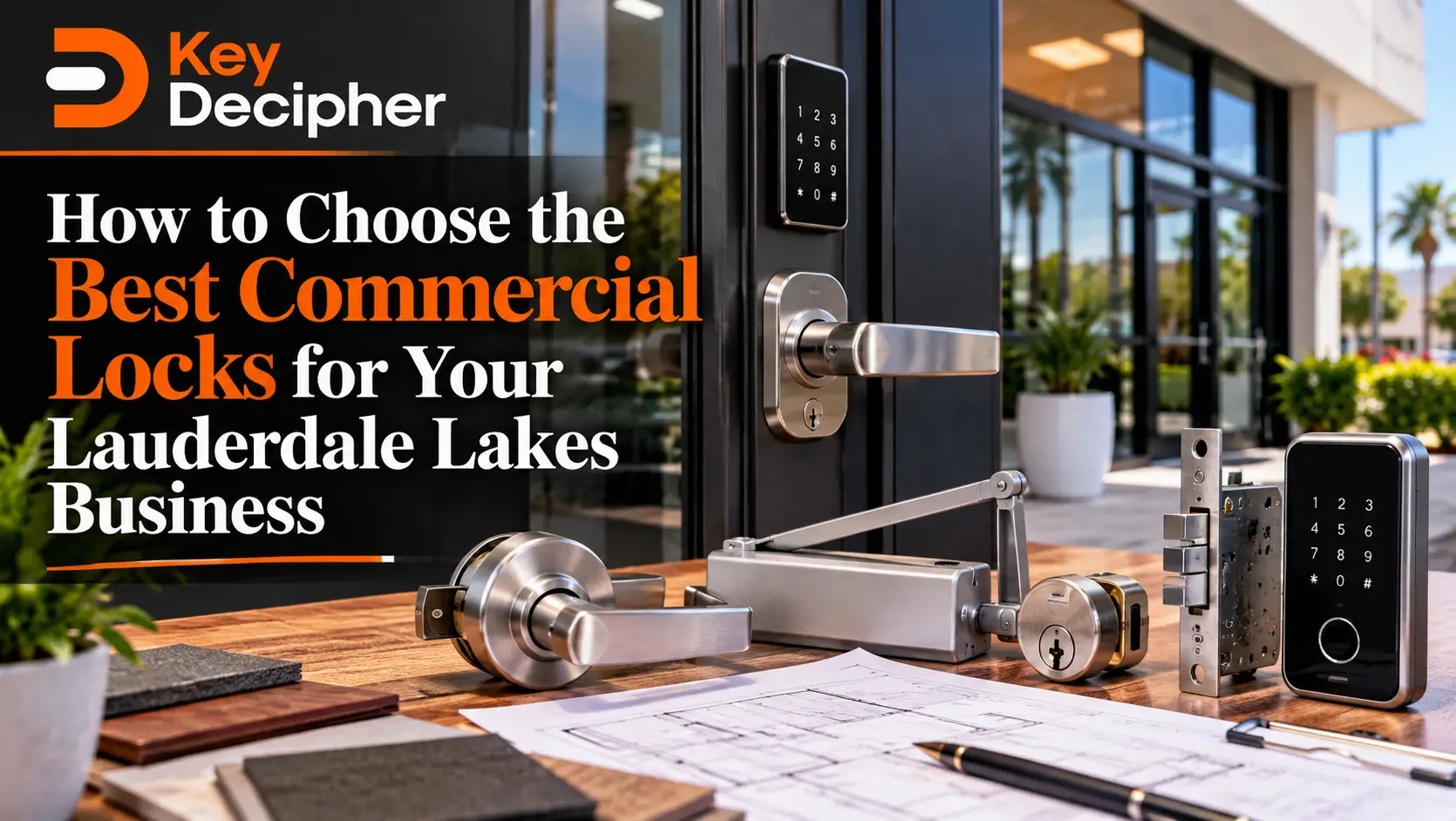
For help comparing lock repair costs, consider the damage, hardware type, urgency, and any additional work needed. Choosing among commercial lock types also depends on the door, level of traffic, access requirements, and security needs.
Why Professional Attention Matters for Business Security
A faulty commercial lock can affect more than convenience. An exterior door that does not latch securely may leave inventory, equipment, or private records exposed. A lock that traps people inside or interferes with an exit can create a life-safety concern.
Commercial door repairs in Lauderdale Lakes and across Broward County must comply with relevant fire and building safety codes. The correct hardware depends on the door’s purpose and the building’s use, so never add a locking arrangement that prevents safe exit.
Key Decipher, LLC. provides commercial locksmith services to help businesses address lock failures, assess damaged hardware, and restore dependable access. A professional assessment can clarify whether the issue calls for adjustment, repair, rekeying, or replacement.
Frequently Asked Questions
How do I know when a commercial door lock needs replacement?
Repeated jamming, significant cylinder damage, failed internal components, or recurring security problems may indicate replacement is appropriate. A professional can evaluate the hardware and confirm whether fixing it is still a dependable option.
Why Does a Commercial Door Lock Sometimes Fail to Work Properly?
Intermittent problems can result from a worn cylinder, damaged key, loose hardware, door misalignment, or an inconsistent electronic power supply. A proper diagnosis is essential before installing any new components.
Can I use lubricant on a sticking commercial lock?
Only use a product suitable for the specific lock and follow the manufacturer’s instructions. Certain lubricants may cause buildup or harm the lock’s internal parts. If the lock continues sticking, arrange a professional inspection.
Should I repair a lock or replace it after losing a key?
Not necessarily. Rekeying may be sufficient when the existing lock is compatible and in good condition. Replacement may make more sense if the hardware is damaged or a different security arrangement is needed.
Final Thoughts: Address Lock Problems Before They Escalate
Commercial door lock problems rarely improve when the warning signs are ignored. Sticking keys, loose hardware, failed latches, and unreliable electronic access should be investigated before they disrupt operations or compromise security.
Key Decipher, LLC. can help businesses evaluate lock issues and provide an appropriate solution based on the condition of the hardware and the property’s needs. Prompt professional attention can restore reliable access while helping keep employees, assets, and business premises protected.