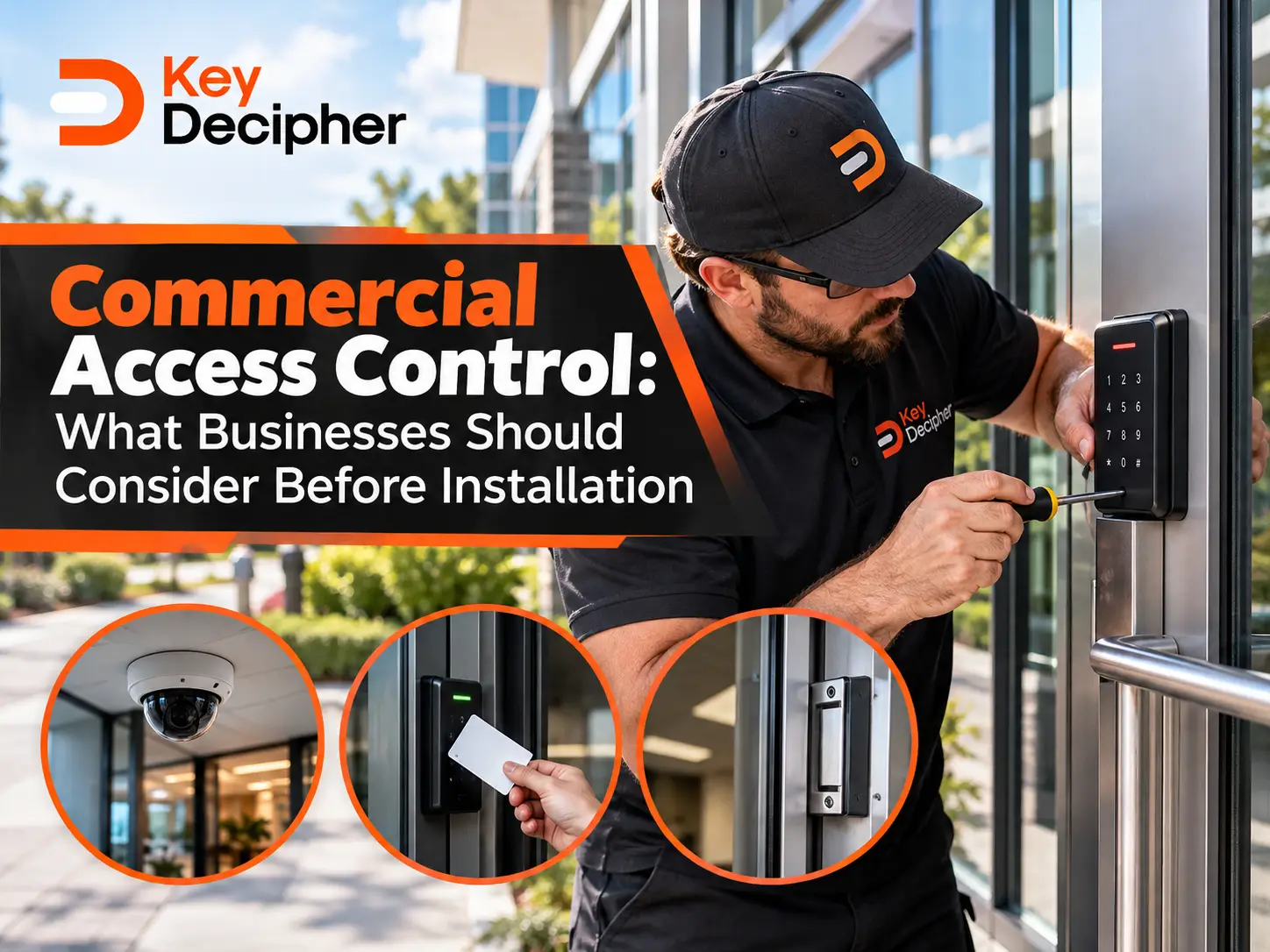
A commercial access control system isn’t just a door unlocker. It dictates who is allowed to enter a building, where employees can go, and how companies control access when employees, contractors, or security staff members change.
When it comes to businesses in Lauderdale Lakes, FL, the selection of a system is not as simple as picking key cards or electronic locks. There are varying degrees of security needs for retail stores, offices, warehouses, and multi-tenant properties. If these things are planned before installation, there will be no need to encounter unnecessary expenses, access issues, and upgrades after the installation.
Start With the Doors and Areas You Need to Protect
Before comparing commercial access control systems, identify which entry points need restricted access and why. For a small office, only a controlled entrance at the front door and records room are necessary. A warehouse may also need restrictions around inventory storage, loading areas, and equipment rooms.
Walk through the property and make a list of access points.
- Main entrances: Control entry for employees, visitors, and approved contractors.
- Restricted rooms: Protect server rooms, supply storage, financial records, and other sensitive areas.
- Back and side doors: Reduce unauthorized entry through less visible entrances.
- Shared spaces: Establish separate permissions for tenants, cleaning staff, and maintenance workers.
This evaluation will determine the number of readers, electronic locks, access control panels and credentials needed.
Choose How People Will Unlock the Doors
The approach to entry varies based on the users, security needs, and the way things are conducted every day. Businesses do not necessarily need biometric readers or advanced mobile systems at every entrance.
| Access method | Where it may work well |
| Key cards or fobs | Offices with regular employees |
| PIN keypads | Staff-only rooms or controlled shared entrances |
| Mobile credentials | Businesses that prefer phone-based entry |
| Biometric readers | Selected areas requiring stronger identity verification |
| Electronic locks with managed credentials | Doors needing centralized access permissions |
Some systems combine multiple methods. For example, a company may have key cards for all employees and a second key for a restricted room.
Consider what happens when a credential is lost. A managed electronic system should allow authorized administrators to disable that credential without changing every lock in the building.
Plan Employee Permissions Before Installation
If everyone has access to all of the doors, it can defeat the purpose of having a security system. Rather, set up user levels by job responsibilities.
A practical permission plan might look like this:
- Reception staff: Main entrance and reception areas.
- Warehouse employees: Approved work areas and designated stockrooms.
- Managers: Additional operational areas where required.
- Contractors: Specific doors during approved work periods.
- Visitors: Access through approved procedures, with an escort when required.
Determine who should be able to issue credentials, revoke privileges, audit access logs, and disable access for former employees. These duties should be assigned prior to system activation.
When an employee leaves, businesses need a clear process for collecting keys and revoking access. A documented key return process helps prevent former employees from retaining access to restricted areas.
Check Door Hardware, Power, and Emergency Exit Requirements
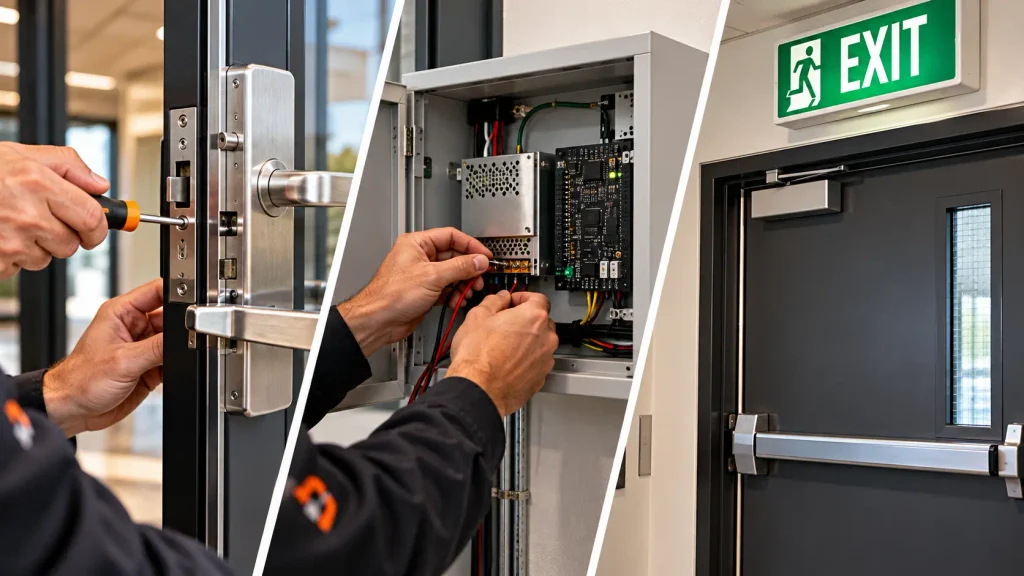
The access control system should be compatible with an existing door system. There may be a need to install compatible electric strikes or electromagnetic locks for some commercial doors, or to modify the frame, closer, or existing hardware.
Power and connectivity also matter. Electronic locks require a suitable power source, and networked systems may require cabling or good network access. Ask the installer what will happen if the power goes out or the network fails, and if backup power is suitable for your building.
Safety must remain a priority. Controlled entry cannot prevent occupants from leaving during an emergency when the applicable building and fire codes require free egress. Locking and release arrangements for the door and system depend on the door, occupancy, and design of the system.
For context, the 2023 Florida Building Code, Eighth Edition, took effect on December 31, 2023. Its applicable provisions should be reviewed alongside local requirements before installation. Certain regulated door openings have a minimum clear width of 32 inches, but the exact requirements depend on the opening and its use.
Decide Who Will Manage the System
Some companies want to have an on-site system operated by local equipment. Others gain from administration in the cloud, which might mean that they can easily change permissions remotely when necessary. Hybrid arrangements are also available. The right option depends on how the business operates.
Consider these questions before choosing:
- Will access need to be managed from more than one location?
- How many doors and users will the system support?
- Can the business maintain the network and equipment?
- What happens if internet access is interrupted?
- Are access records stored securely, and who can review them?
- Can the system expand if another office or entrance is added?
Skip features your business does not need, but choose a system that can expand to prevent costly changes later.
What Should You Budget for Installation?
The cost of commercial access control installation depends on the number of doors, types of locks, wiring requirements, credentials, software, and integration needs. Replacing a compatible lock at one entrance is a different project from installing readers and electronic hardware throughout a multi-door facility.
Request a detailed quotation for equipment, labor, cabling, software fees, cost of credentials, training, and continuous support. Where existing doors and hardware can be safely and compatibly reused, this will help minimise the work required.
Businesses comparing service rates can review commercial locksmith pricing to understand the factors that affect costs. Request a site assessment instead of relying on a general estimate before your system requirements have been established.
Frequently Asked Questions
How long does commercial access control installation take?
A single door installation with appropriate hardware devices could be quicker than a multiple door installation that needs new wiring, door modifications, or network integration. Once they have evaluated the site, the installer should give a timeline.
Can an existing commercial door use electronic access control?
Often, yes. Compatibility is determined by the door, frame type, type and condition of the lock, and the level of safety desired. An assessment can establish if the current equipment can be modified or if it needs to be replaced.
Are key cards better than mobile credentials?
Neither is automatically better for every business. Key cards are familiar and easy to issue, while mobile credentials can reduce the need for physical cards. Choose based on user needs, device policies, security requirements, and replacement procedures.
What happens if the power goes out?
The outcome depends on the lock, power supply, backup equipment, and system configuration. Confirm how each controlled door behaves during a power failure and ensure the arrangement meets applicable life-safety requirements.
Final Thoughts: Find the Right System for Your Business
Effective commercial access control starts with understanding the building, its users, and the risks that matter most. Clear permissions, compatible hardware, dependable power, safe exit arrangements, and a realistic maintenance plan help businesses avoid preventable problems.
Key Decipher, LLC. can help businesses evaluate their access control needs and provide a system around their property, daily operations, and security priorities.