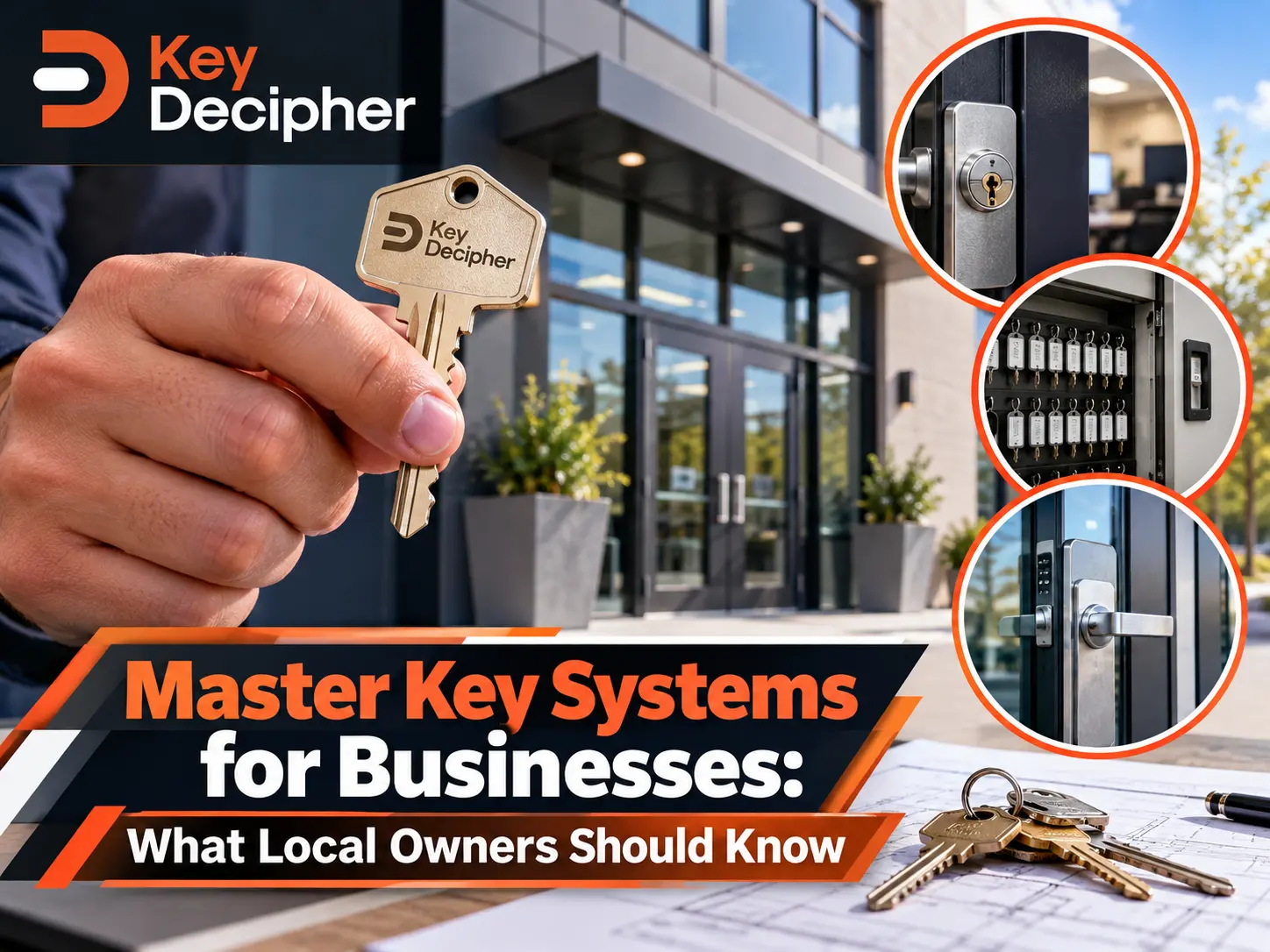
When you have multiple employees who have to access various rooms, it can get confusing to manage keys for your commercial property. The business owner may require access to all departments, and employees should be granted access to those areas necessary for their work. Master key systems for businesses organize these permissions through a planned hierarchy of keys and locks.
The objective for Louisville business owners is to make it easier for day-to-day access while maintaining restricted areas. The right configuration will vary based on the business operations, building configuration, current door equipment, and business expansion plans.
How a Commercial Master Key System Works
A commercial master key system uses specially configured lock cylinders that respond to different keys. Each key comes with assigned permissions, which means that employees can go into specific areas, whereas authorized managers have more access rights.
Three common key types form the foundation of many systems:
- Change key: Opens an assigned lock or a designated group of locks.
- Sub-master key: Opens several locks within a department, floor, or specific area.
- Master key: Opens the locks assigned beneath it in the system’s hierarchy.
Larger properties might have multiple levels, such as a grand master key. However, more levels also mean more permissions to manage. The system should only be as complex as the building’s actual needs.
Which Access Levels Does Your Business Need?
The best design starts with people and responsibilities, not simply the number of doors. The access needs of a retail store are different than that of a warehouse, medical office, or multi-tenant building.
Consider a commercial office with a reception area, private offices, a records room, and a supply closet. Common areas might need to be accessed by general employees, department managers may need more areas to work in, and an authorized administrator may require more access.
A basic access plan might look like this:
| User | Appropriate access |
| General employee | Assigned workspace and approved shared areas |
| Department manager | Department rooms and relevant storage |
| Maintenance staff | Designated service and equipment areas |
| Authorized administrator | Broader access based on responsibilities |
Prior to assigning keys, determine sensitive records, inventory, equipment rooms, etc., and other restricted areas. Never grant someone higher access privileges because it makes it easier for them to carry fewer keys.
Plan Your System Before Installation
The first step in creating a well-designed business master key system is to have a plan. Follow these steps before choosing cylinders or ordering keys.
- List the doors. Record each commercial door, its existing lock, and the room or area it protects.
- Assign access permissions. Decide who needs access to each area and who should approve exceptions.
- Inspect existing hardware. Some lock cylinders may be compatible with the proposed system, while others may need replacement.
- Plan for future changes. Consider new departments, additional offices, staff turnover, and changes in building use.
- Document the hierarchy. Keep an accurate record of key identifiers, assigned users, and authorized duplication.
This planning process is also helpful to businesses that are considering the alternatives of traditional keys versus electronic access. When reviewing commercial access control considerations, weigh the need for physical keys against features such as scheduled access, electronic credentials, and faster permission changes. In some cases, mechanical locks work well along with electronic controls.
Key Control Is Just as Important as the Locks
A master key system doesn’t necessarily improve the security of a property. If a key with wide permissions is lost or misused by being duplicated, several rooms could be compromised. Clear procedures help reduce that risk.
Useful key-management practices include:
- Keep a record of every issued key and its assigned user.
- Restrict key duplication to authorized personnel.
- Store spare master keys securely, with access limited to designated people.
- Collect keys when employees leave or change roles.
- Review access permissions whenever responsibilities change.
- Have a locksmith assess the need for rekeying if a key goes missing.
For example, if you lose a change key, this could impact one room, but if you lose a master key, this could impact multiple departments. The answer should represent the correct permissions for the key and the potential for unauthorized usage.
Choose Suitable Hardware and Professional Installation
The key hierarchy should be compatible with existing locks and doors on the building. Any changes to cylinders, doors, or hardware should be recommended only after a commercial locksmith has examined them for compatibility, condition, and operation.
During the consultation, ask for a written proposal that explains:
- Which doors and cylinders are included.
- How the master and sub-master keys will be assigned.
- Whether existing hardware can be reused.
- How additional keys and future changes will be handled.
- What documentation and maintenance the system requires.
In Louisville, door security must also account for safe exit. Louisville Metro’s Property Maintenance Code, Section 156.201(C), generally requires means-of-egress doors to open from the egress side without a key, special knowledge, or effort, subject to applicable building-code exceptions. A master key arrangement must not compromise emergency exit requirements. Verify the requirements that govern your specific property.

What Affects the Installation Cost?
While the price of a commercial master key system varies by location, there is no standard price across the city of Louisville. Hardware and the extent of the project will also vary, so a standard price quote may not apply to your property.
The main cost factors include:
- Number of doors: More doors generally require more cylinders, keys, and configuration work.
- Hardware condition: Incompatible or worn locks may need replacement.
- System complexity: Additional access levels require more planning and precise keying.
- Security requirements: Restricted key systems and higher-security hardware may increase material costs.
- Installation needs: Existing door conditions and the amount of on-site work affect labor.
Ask for an itemized contract, which includes hardware costs, installation, key quantities, and any extra repairs. This simplifies the process of comparing proposals based on the real work that is included.
Frequently Asked Questions
Can one master key open every door in a business?
Yes, if the system is designed that way. However, some businesses intentionally restrict access to sensitive rooms by having a separate locking system.
Is a master key system suitable for a small business?
Yes. Organized access may be useful for even a small office with a couple of limited rooms. The system should be easy enough to use, with no need to have unnecessary key levels.
What happens if a master key is lost?
Start by figuring out which locks the key opens and how much risk there is for unauthorized access. Usually, a locksmith will suggest rekeying the affected cylinders or swapping out parts of the system.
Can existing commercial locks be used in a master key system?
Sometimes you can, but you will need a locksmith to check the lock cylinders and hardware first. Some locks may be compatible; others might need to be replaced.
How often should a business review its key access?
Whenever someone leaves, transitions to new roles, or acquires additional responsibilities, you should confirm permissions. Organizing periodic evaluations is smart, as it enables you to detect unnecessary access or missing keys.
Is a master key system better than electronic access control?
Neither is automatically better for every property. Mechanical keys work well for basic access, while electronic systems can handle scheduled permissions and let you manage credentials. The right choice depends on your building, your security needs, and your budget.
Final Thoughts: Build a System Around Your Business
A trustworthy commercial master key system starts with clear access rules, the right hardware, and solid key management. If you think through these details before installing, you will avoid confusion and make sure only the right people get into restricted areas.
Key Decipher, LLC. helps businesses evaluate their commercial locking needs and provide practical key-control solutions. Review the proposed hierarchy carefully so the finished system supports daily operations, future changes, and appropriate security.