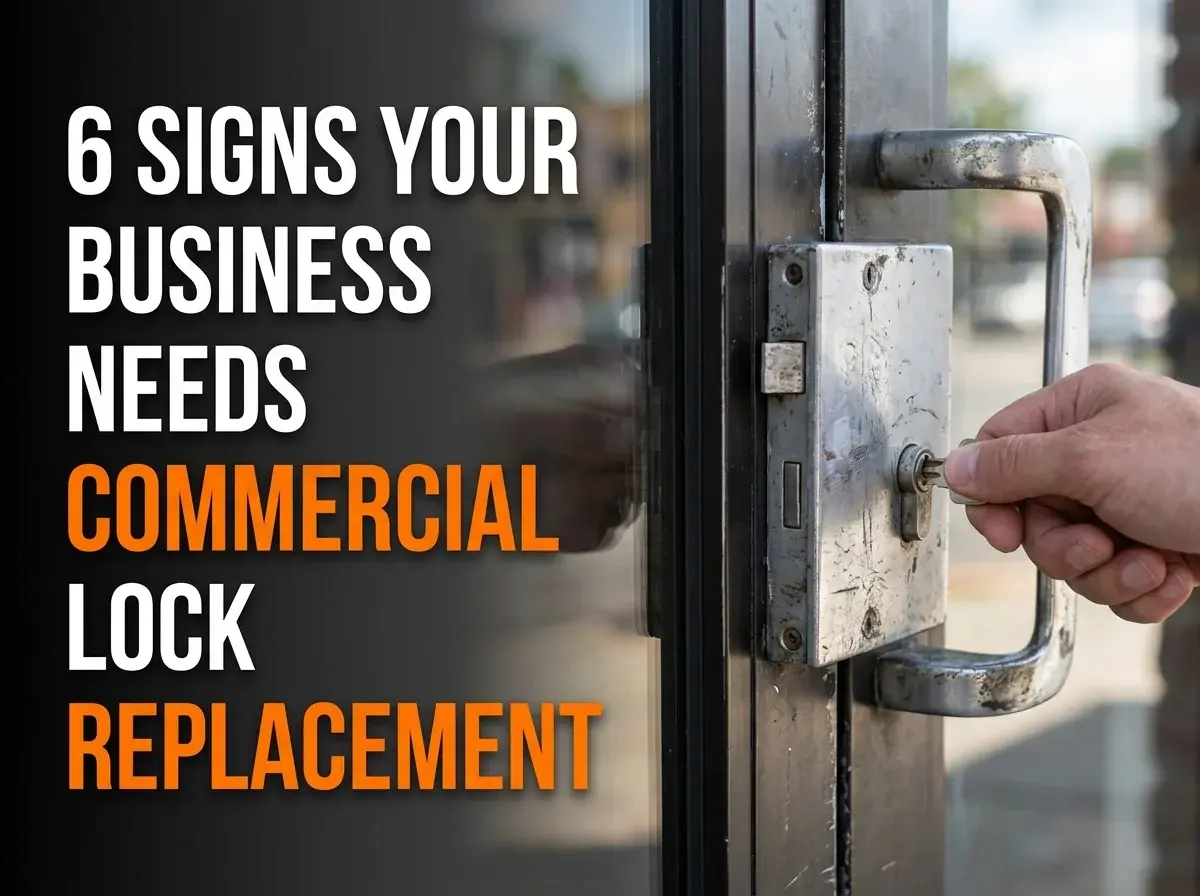
A business lock should work smoothly and control who enters. A stuck key, a misaligned latch, or a broken lock can be an indication of a security issue, not a mere annoyance.
Lauderdale Lakes and other South Florida communities are exposed to frequent use, humidity, and rain conditions for commercial locks. Regular inspection will help you notice when commercial lock replacement might be necessary.
1. The Key Sticks or Will Not Turn Smoothly
A key that catches may point to a worn lock cylinder, a damaged key, dirt inside the mechanism, or a door that has shifted out of alignment. Do not force it because the key may bend or break in the lock.
If there is one, use a spare key. If multiple keys get stuck in the same lock, or the problem persists following simple maintenance, schedule a check-up. Replacement could be a good idea if internal components are worn, or if the lock keeps turning up on its own.
2. The Lock or Door Hardware Is Loose or Damaged
Locks should be secure in the door, and the latch should properly engage with the strike plate. Loose handles on the security, a wobbly cylinder, cracks, or a latch that doesn’t fit with the opening can weaken security.
It could be a damaged strike plate, loose screws, or a sagging door; these problems may require adjustment rather than replacement of the lock. For a broken lock body or internal components, commercial door lock replacement might be required.
3. The Lock Shows Rust, Corrosion, or Heavy Wear
South Florida is notorious for these deteriorating storefront and service door locks, as moisture and rain frequently can cause them to break down more quickly. Rust, pitting, peeling finishes, or stiff finishes are indicators of corrosion. Locks tend to degrade over time, especially indoor locks, if they are used frequently.
The color of a lock can’t always be used to determine failure. For sticking keys, check for inadequate latch movement or wobbling parts. If the mechanism is corroded or the lock is no longer reliable, have it evaluated to determine if it needs to be replaced.
4. There Has Been a Break-In, Attempted Entry, or Lost Key
Once the lock is broken, examine the lock, edge of a door, door frame, strike plate, and other hardware. The damage could be to internal components or points for a lock that looks intact. A commercial locksmith can determine if the hardware is reliable.
Another risk is associated with lost keys and staff turnover, such as when you don’t know who still has access. If you have a key system in place, it may be necessary to rekey or replace the affected locks. Take action as soon as possible if keys have been lost containing information that identifies the property.
5. Staff Keep Reporting Lock Failures
Record each time staff finds a door that doesn’t latch, a key that won’t turn, or a lock that jams. Such failures can cause delays in opening routines, disruption of delivery, or an unsecured entrance.
If a problem occurs only once, it can be fixed. If the lock has been broken repeatedly, or multiple calls have been made to the service, the lock or the hardware that it is mounted on may be beginning to show signs of wear and tear. Call a commercial locksmith to help determine the cause and the difference between repair and replacement.
6. Your Locks No Longer Match Your Access Needs
A lock may work but not be a fit for a business. If there are more employees, or the use of rooms has changed, or the company requires more control over staff-only spaces, an old key arrangement might be difficult to manage. Older equipment might not have the functions that you need in your current security system.
There are many different types of locks or access-control hardware, such as a high-security lock, a master key system, or compatible access-control hardware. Smart locks are not the best choice for all doors and must be taken into account to consider the use of the door, how robust it will be, the power requirements, and who will be using the lock. A proposed commercial lock upgrade needs to facilitate day-to-day operations.
Repair or Replace? A Quick Check
| What you notice | Sensible next step |
| One damaged key, but a spare works normally | Replace the key and monitor the lock |
| Loose screws or minor door misalignment | Check the hardware and door alignment |
| Broken parts, heavy corrosion, or recurring jams | Arrange an inspection for possible replacement |
| Lost keys or uncertain access after staff changes | Review rekeying and replacement options |
| Damage after forceful entry | Secure the door and inspect the lock and frame |
This table is a starting point, not a diagnosis. The lock, door frame, and strike plate should all be evaluated by a locksmith. A new lock will not fix a sagging door or damaged frame by itself.
Choose Hardware That Fits the Door
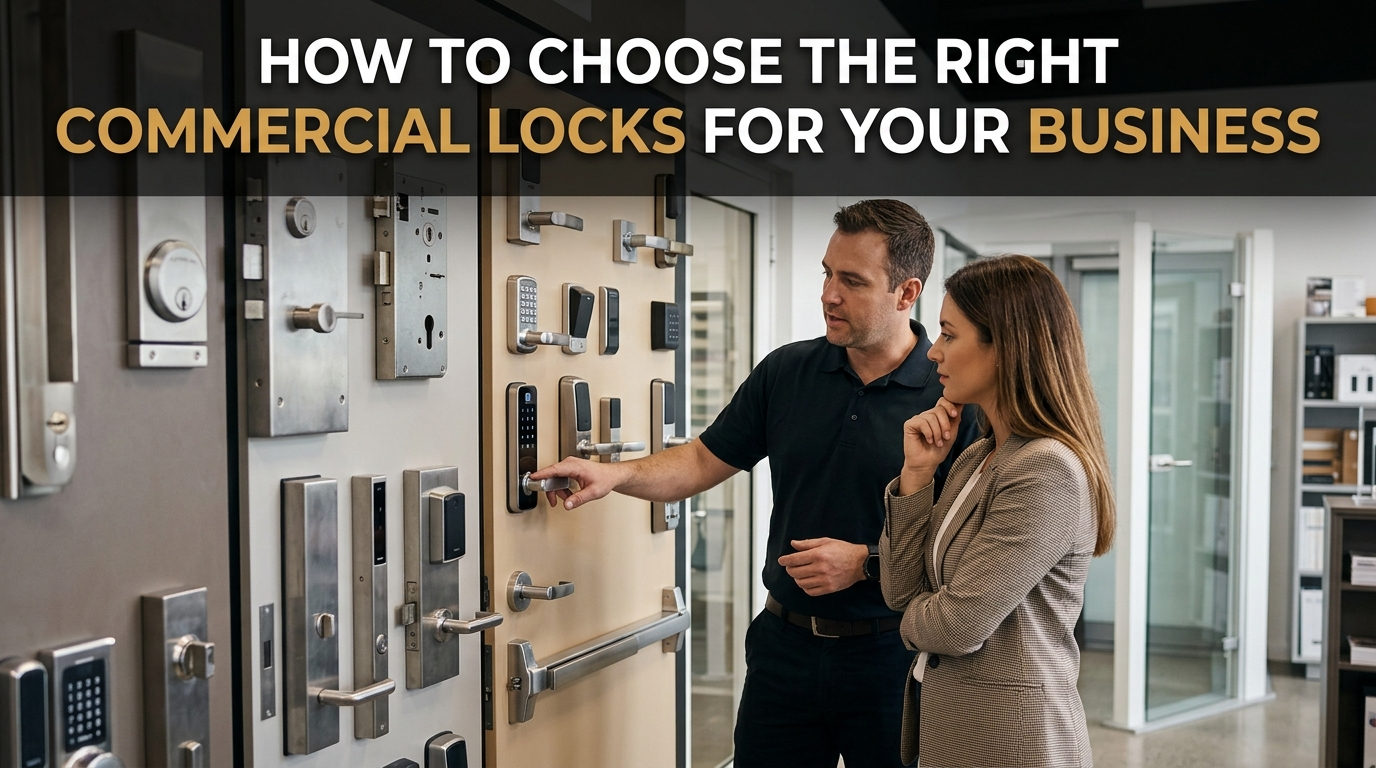
When making a selection for the replacement, factors to consider are the level of access control needed, outdoor exposure, and the use of the doors. Different doors can be fitted with a mortise lock, deadbolt, storefront lock, or access-control device. The new hardware should fit into the door and work with the existing hardware.
For businesses in Lauderdale Lakes, Fort Lauderdale, Sunrise, and nearby South Florida communities, local conditions and the building’s layout should inform the choice. Key Decipher, LLC. helps business owners address damaged locks, unreliable operation, and changing access needs. A sound recommendation starts with inspecting the existing hardware and identifying the cause.
Frequently Asked Questions
When should a business replace its commercial locks?
Replace a lock when it has damaged parts, heavy corrosion, frequent operating issues, or if it was broken into. Other factors such as lost keys or key changes in access can also require re-keying or replacement.
Is a sticking commercial lock always ready for replacement?
No. Sticking could be caused by a worn key, dirt, or a misaligned door. If the problem persists with the use of several keys or if the cylinder returns after maintenance, have the cylinder and lock checked.
Should we replace locks after an employee leaves?
Not always. If all keys are returned and key control is good, there may be no need for replacement. Discuss rekeying/replacing locks if keys are missing or cannot be explained.
Can a new lock fix a door that will not latch?
Not necessarily. It could be a shifted or loose door, a broken strike plate, or a faulty closer. Get the whole door opening inspected and repair the problem at the root cause.
What should a business consider when upgrading its locks?
Start with the basics: look at your door type, how much foot traffic the door gets, whether it’s exposed to the weather, who you want to give access to, and if you would benefit from a master key or an access-control system. Make sure the hardware actually fits your doors and covers your daily security needs.
Final Thoughts: Replace Locks Before Problems Escalate
Sticking keys, loose hardware, corrosion, break-in damage, and recurring failures are reasons to review door security. Some problems need repair; others call for replacement or an access-control update. An early inspection helps avoid lockouts and supports an informed security decision. Contact Key Decipher, LLC. to discuss commercial lock replacement options for your business.