A front door key should slide into the lock, turn smoothly, and come out without much effort. When it starts catching, sticking halfway, or becoming difficult to remove, something may be interfering with the lock cylinder. Even a small change in how the key moves deserves attention.
The problem might be a worn key, dirt inside the keyway, damaged lock pins, or pressure caused by a misaligned door. Applying more force rarely solves the underlying issue. Identifying where the resistance occurs helps determine whether simple maintenance will work or the lock needs professional repair.
Why Does a Door Lock Hold Onto the Key?
Most residential deadbolts use a pin tumbler mechanism. Inside the cylinder, small spring-loaded pins move when the correct key enters. The key’s cuts lift those pins to the correct positions, allowing the lock plug to rotate.
When the keyway contains debris, the pins become worn, or the key blade is damaged, movement becomes less smooth. A key may also turn properly but resist removal because the plug or internal components are not returning to their normal position.
Four Common Reasons Your Front Door Key Keeps Sticking
Different problems create different types of resistance. Notice whether the key catches during insertion, turning, or removal.
| Possible cause | Common sign |
| Worn or bent key | Key catches or enters unevenly |
| Dirt inside the keyway | Resistance during insertion or turning |
| Worn cylinder pins | Key turns inconsistently or sticks |
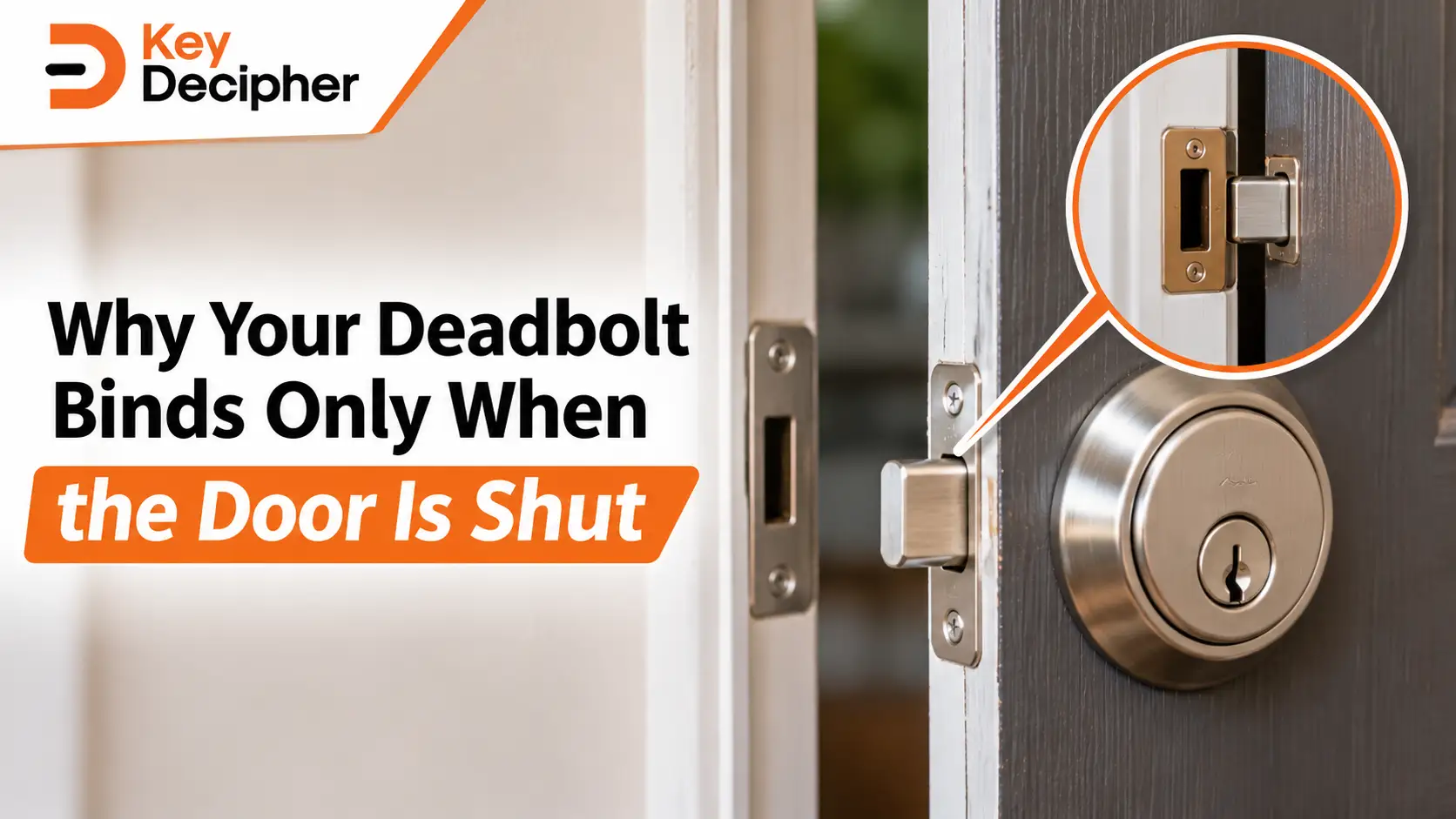
| Door misalignment | Deadbolt binds when the door is closed |
Worn key cuts: Repeated use gradually wears the key blade. A poorly duplicated key may also have inaccurate cuts, making it difficult for the pins to align correctly.
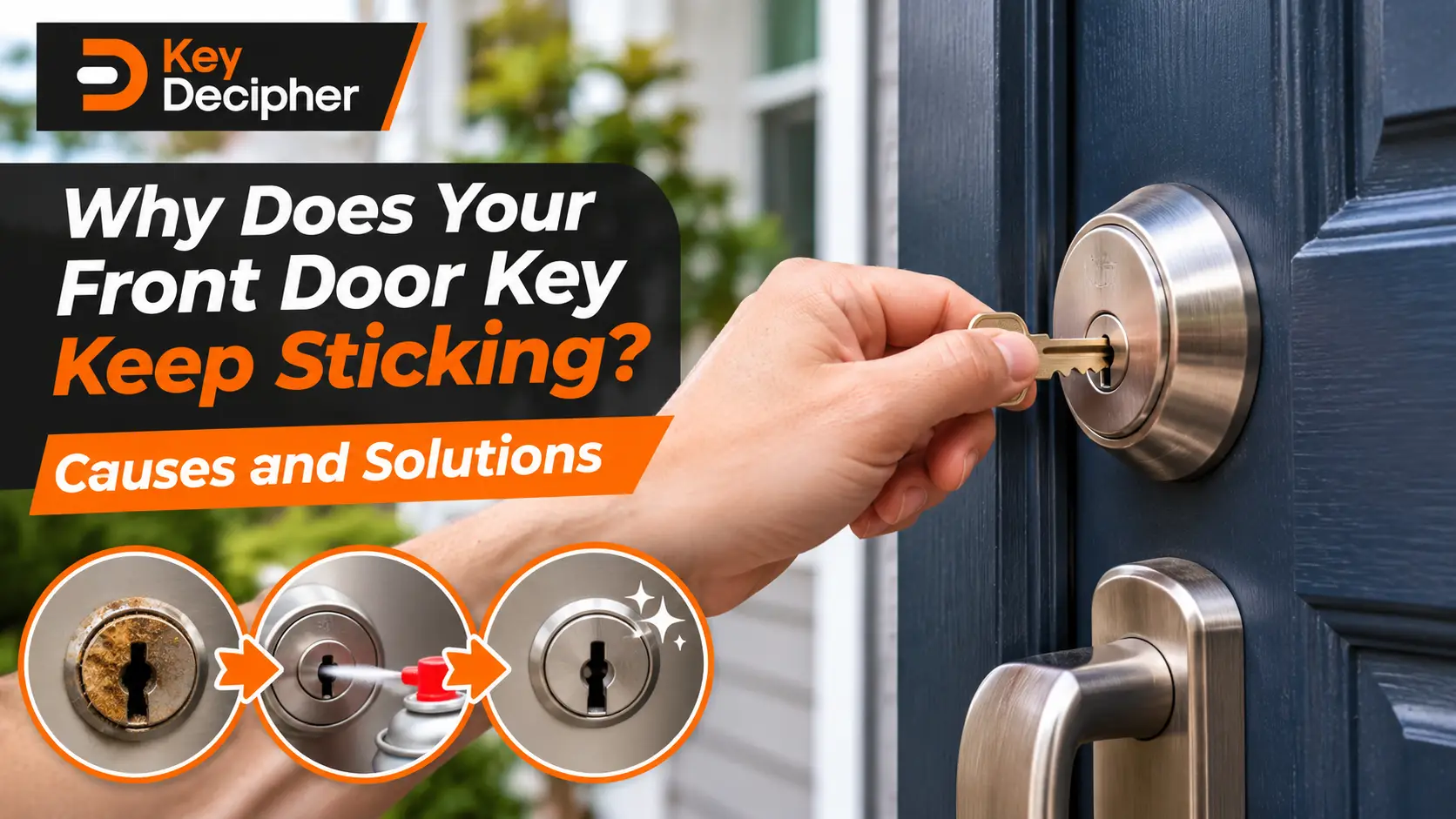
Keyway obstruction: Dust, dirt, and small particles can collect inside the cylinder. This contamination creates friction and prevents the key from moving freely.
Internal cylinder wear: Springs, pins, and other components experience wear over time. A damaged pin or worn plug may cause inconsistent turning and key extraction problems.
Door and deadbolt misalignment: If the door shifts or the strike plate sits incorrectly, the deadbolt may press against the opening. This pressure can make the key difficult to turn or remove. If the hardware itself is damaged or incorrectly fitted, professional deadbolt installation may be necessary.
What to Check Before Trying a Repair
Start with a few simple observations rather than forcing the mechanism. These checks help narrow down the problem without taking apart the lock.
- Inspect the key: Look for bends, deep scratches, worn cuts, or a damaged tip.
- Try a spare key: Smooth operation with another key may indicate that the original is worn or incorrectly cut.
- Check the door position: Notice whether the key works better with the door open than when it is closed.
- Observe the resistance: Determine whether the key catches during insertion, turning, or removal.
If the lock works with the door open but sticks when closed, door alignment or deadbolt pressure deserves attention. If both keys behave the same way, the cylinder itself may need inspection.
How to Deal With a Sticky Lock Safely
A little maintenance may help when the problem comes from minor contamination or friction. However, do not treat every sticking lock as a lubrication problem.
- Remove the key carefully: If it is still moving, return it to its normal insertion position and gently withdraw it. Avoid twisting or pulling at an angle.
- Inspect the keyway: Use a flashlight to look for visible debris. Do not push sharp objects into the opening.
- Choose the correct lubricant: Use a product specifically recommended by the lock manufacturer. Apply a small amount according to its instructions.
- Check key movement: Carefully slide the key in and out a few times to see if it catches. Check whether movement improves without forcing the cylinder.
- Check the door alignment: If the key works smoothly with the door open, have the latch, strike plate, and door position checked.
| Important Tip: Avoid pouring household oil or applying excessive lubricant inside the cylinder. Some products attract debris or interfere with internal components. Manufacturers may recommend different products, so follow the lock’s specific maintenance guidance. |
Lauderdale Lakes: Why Exterior Lock Maintenance Matters
Lauderdale Lakes homeowners should pay attention to moisture exposure around exterior door hardware. The nearby Fort Lauderdale climate station records 68.77 inches of normal annual rainfall under the 1991–2020 climate normals. Rainwater entering an exposed keyway, combined with humid conditions, may contribute to corrosion and contamination over time.
Check exterior locks for rust, damaged weather seals, and signs of moisture around the cylinder. If the key becomes progressively harder to remove, do not assume lubrication alone will solve it. A locksmith can determine whether cleaning, cylinder repair, or replacement is appropriate.
When Does a Sticky Lock Need Professional Repair?
Some problems involve internal components that cannot be corrected through basic maintenance. A residential locksmith can inspect the cylinder, keyway, pins, and surrounding door hardware to identify the source of resistance.
Professional attention is especially useful when:
- The key repeatedly gets trapped inside the cylinder.
- The lock turns only when the key is held at a certain angle.
- A spare key also sticks or refuses to turn.
- The cylinder feels loose or makes unusual grinding sounds.
- The key has broken inside the lock.
Key Decipher, LLC. can assess whether the existing cylinder needs cleaning, repair, rekeying, or replacement. Replacing the entire lock is not always necessary; the right option depends on the condition of its internal components.
Frequently Asked Questions
Why does my house key get stuck but still turn?
The key may turn while the cylinder’s pins, plug, or internal components are still experiencing friction. Difficulty removing the key may also result from damage to the lock or wear on the key itself. If the problem happens repeatedly, have the lock inspected before the key becomes trapped.
Is WD-40 Suitable for Fixing a Sticking Door Lock?
Do not assume a general-purpose spray is suitable for every lock. Some manufacturers specify particular lubricants, and excess or unsuitable products may leave residue inside the cylinder. Check the manufacturer’s maintenance instructions before applying anything.
Why does my key come out easily when the door is open?
The deadbolt may be pressing against the strike plate when the door is closed. Movement in the door or frame can cause the two components to fall out of proper alignment. Have the latch and strike plate checked instead of repeatedly forcing the key.
Should I replace a lock if the key keeps sticking?
Not necessarily. Cleaning, lubrication with an approved product, or cylinder repair may resolve the issue. Replacement becomes more appropriate when internal parts are damaged, the cylinder is badly worn, or repair is no longer reliable.
How Should You Handle a Key That Snaps Inside the Lock?
Avoid further turning the key or forcing the broken fragment farther into the lock. Avoid using household tools that could damage the pins. Have a locksmith inspect the lock and extract the broken key without damaging the cylinder.
Final Thoughts: Restore Smooth Key Movement Before the Lock Fails
A sticking front door key is often an early sign of wear, contamination, or mechanical resistance. Identifying the cause before the cylinder stops working helps prevent a frustrating lockout and unnecessary hardware replacement. If the problem continues, contact Key Decipher, LLC. to find out whether maintenance, cylinder repair, or replacement is the right solution.