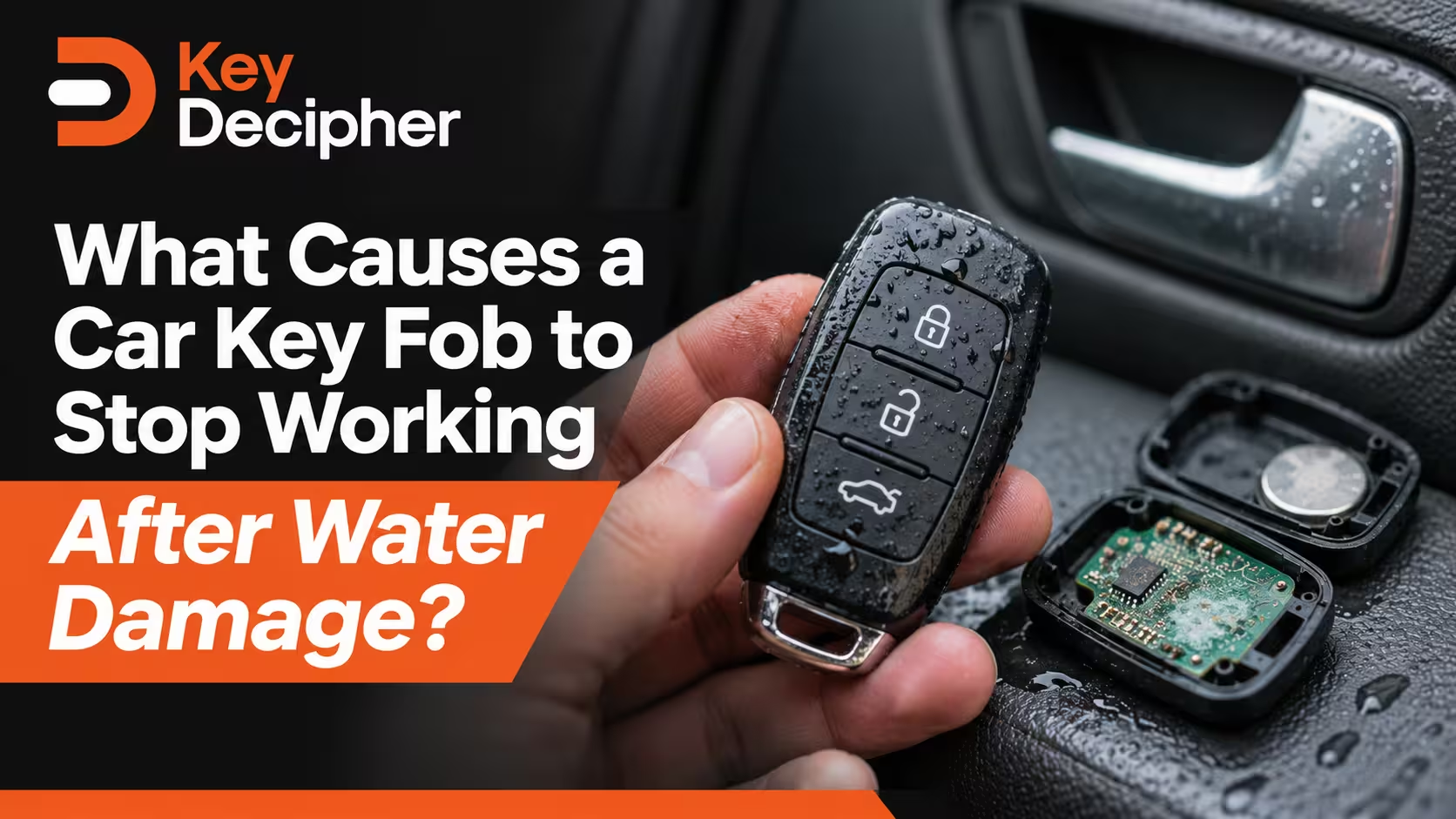
A key fob can look completely normal after getting wet, yet the doors may stop responding, or the vehicle may fail to recognize the key. This can happen after a spill, heavy rain, a drop in a puddle, or a washing-machine cycle. The problem is often hidden inside the case.
Water exposure does not always destroy a remote immediately. Moisture can reach the battery contacts, transmitter, or printed circuit board and interfere with the electrical signals. Even if the buttons work again after drying, residue and corrosion may cause problems later.
What Water Does Inside a Key Fob
Most remote keys contain a small battery, metal contacts, electronic components, and a printed circuit board (PCB). Smart keys may also contain a transponder or other components that communicate with the vehicle’s immobilizer.
When moisture enters the housing, several failures are possible:
- Battery contact corrosion: Water and residue can affect the metal contacts, interrupting power from the coin-cell battery.
- Circuit board oxidation: Moisture left on conductive paths and solder joints can lead to corrosion and unreliable connections.
- Internal electrical short: If liquid bridges points that should remain separate while the circuit is powered, the fob may behave unpredictably or stop responding.
- Transmitter or component damage: The remote may no longer send a clear radio-frequency signal to the vehicle.
Fresh water, salt water, pool water, and laundry detergent do not leave the same residue. Salt and chemicals can leave damaging deposits after moisture evaporates.
Why the Fob May Fail Hours or Days Later
A wet remote may still lock or unlock the vehicle at first. That does not prove the electronics are safe. Water can remain beneath buttons, around the battery holder, or under components on the circuit board. As it evaporates, minerals and other residue can remain behind and contribute to corrosion.
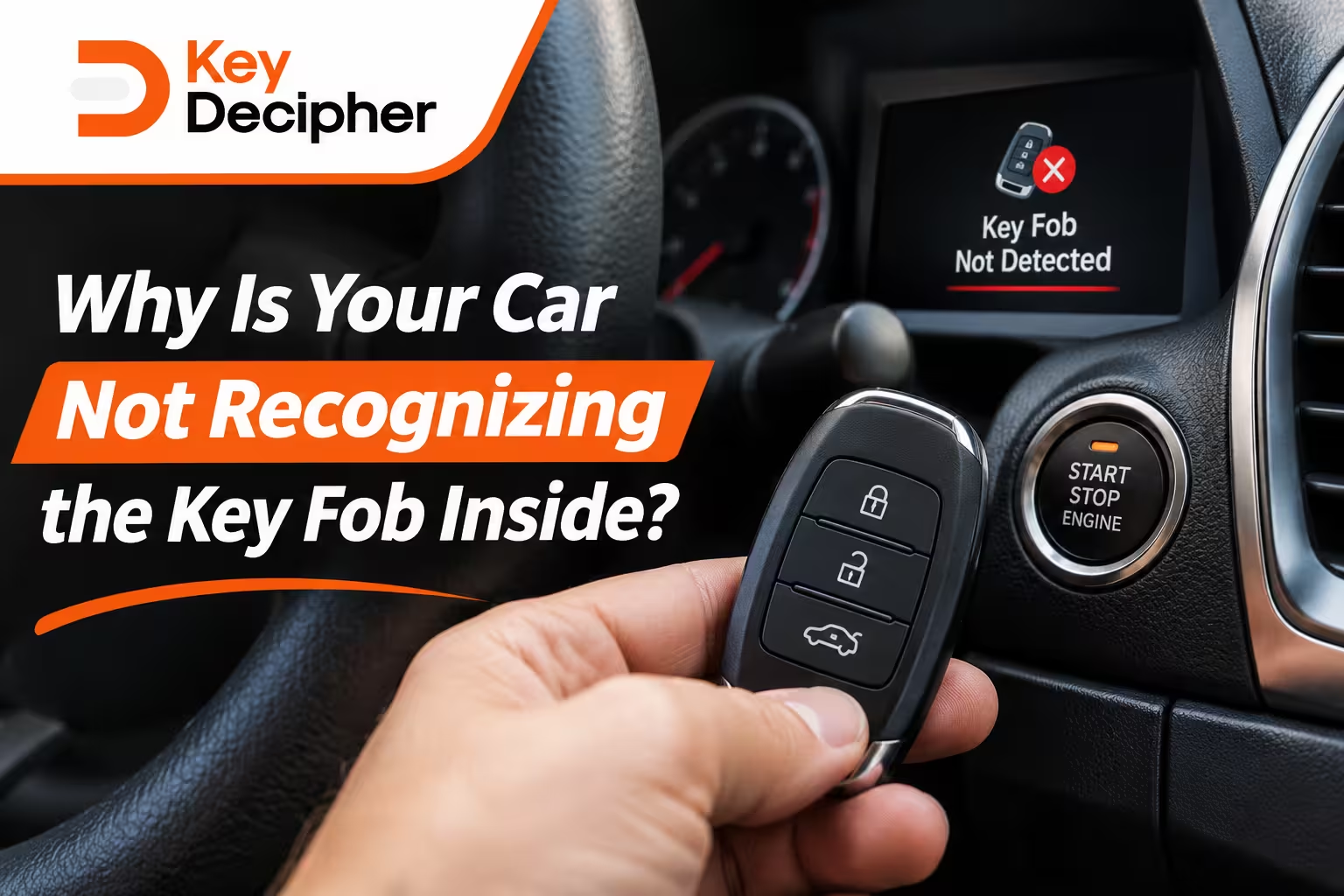
Buttons may respond only when pressed hard, the operating range may shrink, or the vehicle may display a key-not-detected warning. A dead battery is possible, but repeated battery replacement will not fix a corroded board.
What to Do Immediately After the Key Gets Wet
Avoid repeatedly pressing buttons. The goal is to limit electrical activity and prevent moisture from spreading.
- Remove it from the water and dry the exterior. Use a soft, absorbent cloth. Do not shake it aggressively.
- Stop pressing the buttons. Avoid testing the lock, unlock, panic, or remote-start functions while moisture may be inside.
- Remove the battery only if the design allows it. Follow the vehicle or key manufacturer’s instructions. If the case is sealed or difficult to open, do not force it.
- Keep the parts away from heat. Do not use a hair dryer, oven, radiator, or direct sunlight to speed up drying.
- Arrange an inspection if it was submerged or exposed to chemicals. A technician can check for residue, corrosion, and damage that simple air-drying will not reveal.
After a laundry cycle, saltwater exposure, or pool submersion, do not assume overnight drying is enough. Use a spare key if available and keep the wet one for assessment.
How to Tell Whether Water Damage Is the Cause
A fob that stopped working immediately after a spill is more suspicious than one that gradually lost range over several months. A weak battery, worn buttons, signal interference, or a vehicle-side issue can produce similar symptoms.
| What you notice | Possible explanation |
| No buttons respond after exposure | Battery, contacts, or circuit damage |
| Buttons work intermittently | Moisture residue or corroded connections |
| Shorter operating range | Transmitter or antenna-related damage, or a weak battery |
| Vehicle does not detect the smart key | Key electronics, transponder, battery, or vehicle detection issue |
| New battery makes no difference | Damage beyond the battery itself |
If a spare key works normally, the affected fob becomes the more likely source of the problem. If neither key works, the vehicle’s battery, receiver, or entry system may need separate testing.
Can a Water-Damaged Key Fob Be Repaired?
Repair depends on the type of key, the liquid involved, and how far the moisture travelled. A technician may be able to replace a damaged battery, clean accessible contacts, or address limited circuit-board contamination. Severe corrosion or damaged components may make repair unreliable.
A professional assessment should establish whether the remote transmitter still functions, whether the transponder is recognized, and whether the fob can communicate with the vehicle. Some keys also require programming or synchronization after replacement.
| Situation | Likely next step |
| Only the battery is depleted, and contacts are clean | Correct battery replacement and testing |
| Minor, accessible contamination | Inspection and possible electronic cleaning |
| Corroded or failed circuit board | Repair assessment or replacement |
| Fob is not recognized after damage | Test transponder and vehicle compatibility; program a replacement if needed |
Confirm the key type and programming requirements before buying a replacement. Key Decipher, LLC. can assess the damaged remote and help determine whether repair or replacement is the practical option.
Does Water Resistance Mean a Key Fob Is Waterproof?
Not necessarily. Some keys may tolerate limited moisture, but that does not mean they can be submerged, put through a wash cycle, or exposed to salt water. Water resistance varies by design; many vehicle manuals warn owners to keep electronic keys away from liquids.
Check the owner’s manual for instructions for your exact model. Avoid storing the remote where it can be crushed, soaked, or left in wet clothing. A cover may reduce splashes, but it cannot guarantee protection against water intrusion.
Frequently Asked Questions
Will a key fob work again after getting wet?
Sometimes. A brief splash may cause no lasting damage, while submersion or exposure to detergent can harm internal electronics. Drying the exterior does not confirm that the circuit board is clean or fully dry.
Should I replace the battery after my key fob gets wet?
The battery may need replacement if it or its contacts became wet or corroded. Follow the manufacturer’s instructions and have the contacts inspected. A new battery will not repair damaged circuit-board components.
Could water damage to a key fob keep your car from starting?
Yes, depending on the vehicle and key design. A vehicle may refuse to start when its immobilizer cannot identify the smart key or transponder. Check the owner’s manual for any emergency starting method.
Is replacement better than repairing a water-damaged key?
It depends on the extent of the damage and the cost and reliability of repair. A technician should check the circuit board, transmitter, transponder, and programming needs before recommending a replacement.
Final Thoughts: Do Not Ignore a Wet Key Fob
Water damage can begin with a simple spill and develop into corrosion or electronic failure later. Stop using a wet remote, follow the manufacturer’s handling guidance, and arrange proper testing if it was submerged or becomes unreliable. Key Decipher, LLC. can help identify the fault and provide services for the right next step.