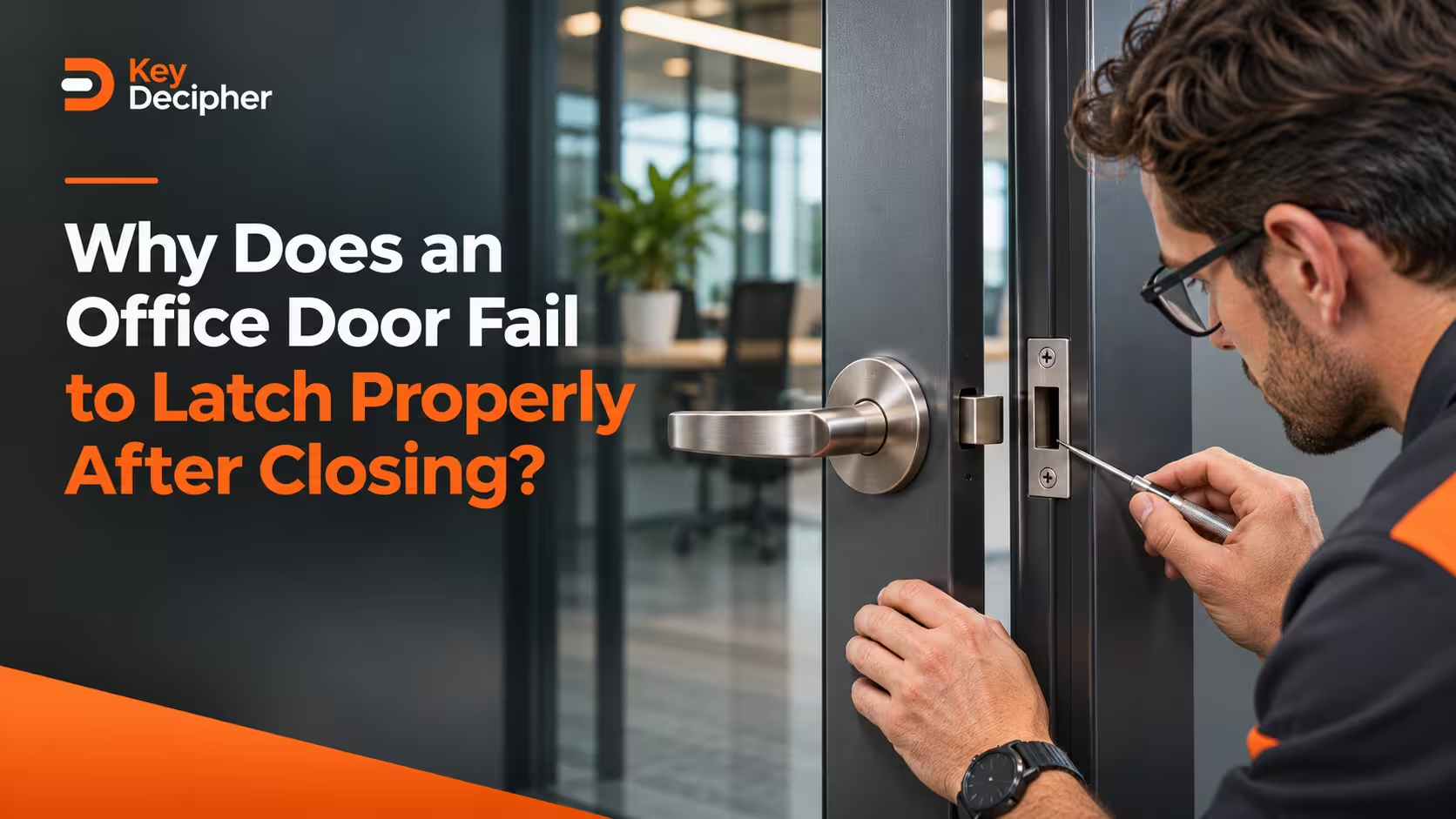
An office door swings shut, but the latch never catches. Staff may assume the room is secure, only to find it partly open later. The fault affects privacy and may expose equipment, records, or restricted areas.
In Lauderdale Lakes, commercial doors may use cylindrical locksets, mortise locks, closers, or access controls. An Office Door Not Latching issue may come from an obstruction or hardware fault. Find out whether the problem comes from door alignment, improper latch-to-strike alignment, or a malfunctioning lock.
Identify Where the Closing Process Fails
The door may seem closed, but that does not necessarily mean it has latched securely. These symptoms help narrow down the cause before anyone attempts a repair.
| What happens | Possible cause |
| Door stops before reaching the frame | Obstruction, weatherstripping, or weak closing force |
| Door reaches the frame, then rebounds | Closer problem or excessive closing speed |
| Latch hits the strike plate | Door strike plate misalignment or sagging hinges |
| Handle moves, but latch does not retract | Worn lockset or mechanical latch failure |
| Door latches only when lifted or pushed | Hinge wear or frame movement |
These components work together, so adjusting one without checking the rest may not solve the problem.
Common Causes of Commercial Door Latch Problems
Misaligned latch and strike plate: The latch bolt must line up with the strike plate opening. Loose hinges or frame movement can shift the door. Scrape marks near the strike are useful clues.
Loose or worn hinges: A heavy door may drop when screws loosen or hinge knuckles wear. Look for uneven gaps, rubbing, or backed-out screws. Do not reposition a heavy door without proper support.
Door closer trouble: A closer controls speed and closing force. Damage, leaks, or poor adjustment may stop the door short or make it rebound.
Worn lock hardware: A damaged latch bolt, weak spring, or loose spindle can cause an Office Door Lock Not Catching problem. Problems such as a wobbly handle or a latch that keeps sticking may point to worn internal components.
Frame distortion or obstruction: Door Frame Settlement, impact, moisture, or a displaced seal can change the opening. Check for uneven gaps, rust, debris, or weatherstripping in the door’s path.
Safe Checks Staff Can Make
Staff can gather useful details with these visual checks. Do not force the door or dismantle the lock.
- Inspect the closing path: Look for floor mats, doorstops, debris, or loose hardware.
- Watch the latch bolt: Does it enter the strike opening or hit its edge?
- Compare door gaps: Uneven spacing may indicate hinge wear or frame distortion.
- Test the handle gently: Note whether it feels loose, stiff, or fails to retract the latch.
- Observe the closer: Does the door stop short, close too slowly, or bounce back?
- Record the pattern: Note whether the fault happens every time or only under certain conditions.
Avoid filing the strike plate, bending the latch, removing closer arms, or changing closing force without confirming the door type and hardware requirements. These actions may affect security or fire-door operation.
What a Proper Commercial Door Inspection Covers
A technician should assess the complete opening before replacing parts:
- Confirm the door type: Identify standard, access-controlled, fire-rated, or panic-hardware openings.
- Inspect hinges and frame: Check fixings, wear, clearances, impact damage, and movement.
- Test latch engagement: Confirm whether the latch meets and enters the strike plate fully.
- Evaluate the closer: Check closing speed, force, and resistance throughout the cycle.
- Examine the lockset: Test the handle, cylinder, and latch to separate alignment issues from internal wear.
- Verify operation: Cycle the door and confirm that it closes, latches, locks, and releases correctly.
This separates lock faults from Commercial Door Alignment Issues and helps determine whether adjustment, repair, or replacement is suitable.
Fire Doors and Exit Hardware Require Extra Care
A building’s life-safety protection depends in part on properly functioning fire-rated doors. Do not wedge it open, remove its closer, disable its latch, or install incompatible hardware. Exit doors must also remain usable as required for the building’s occupancy and approved hardware.
Lauderdale Lakes enforces the Florida Building Code, while local fire officials enforce the Florida Fire Prevention Code. The 8th Edition Florida Fire Prevention Code took effect on December 31, 2023. Permit needs depend on the scope of work, so contact the city’s Building Division before altering or replacing a door assembly. Do not assume every hardware repair either requires or avoids a permit.
If a fire door will not close and latch, or an exit door cannot be opened as intended, arrange prompt professional attention. Do not leave the opening propped open or obstructed while waiting.
When to Arrange Commercial Door Hardware Repair
Arrange an inspection for repeated latch failure, frame damage, closer leaks, or a sticking lock, especially on doors protecting restricted areas or exit routes.
For a business door lock malfunction, the repair needs to restore reliable operation without compromising the door’s intended security function. Key Decipher, LLC. can assess the lock, latch, strike plate, and related hardware to determine whether the fault involves alignment, worn components, or the closing mechanism.
Frequently Asked Questions
Why does my office door close but not latch?
The door may reach the frame without the latch bolt entering the strike plate. Misalignment, loose hinges, a weak closer, a worn latch, or weatherstripping interference can prevent engagement.
Can I adjust the strike plate myself?
You can look for scrape marks or misalignment, but moving or filing the plate may affect secure latching. Do not alter a fire-rated door or exit hardware without confirming the applicable requirements and hardware instructions.
Can a door closer stop an office door from latching?
Yes. A closer with insufficient force may leave the door short of the frame. Excessive closing speed can make it rebound. A technician can assess the closer and resistance across the full closing cycle.
Should a fire-rated office door latch every time?
It must operate according to its listing and applicable life-safety requirements. If it fails to close or latch, do not disable its hardware or prop it open. Arrange a prompt inspection and appropriate repair.
Final Thoughts: Restore Reliable Office Door Latching
A door that will not latch may have a simple obstruction, but repeated failure can signal worn hardware, alignment changes, or a closer problem. Observing the symptoms helps narrow the cause without risking damage through forceful adjustments.
For persistent Office Door Not Latching issues in Lauderdale Lakes, Key Decipher, LLC. can inspect the complete door assembly and determine the appropriate repair. The goal is reliable closing, latching, locking, and release while preserving the door’s required safety function.